
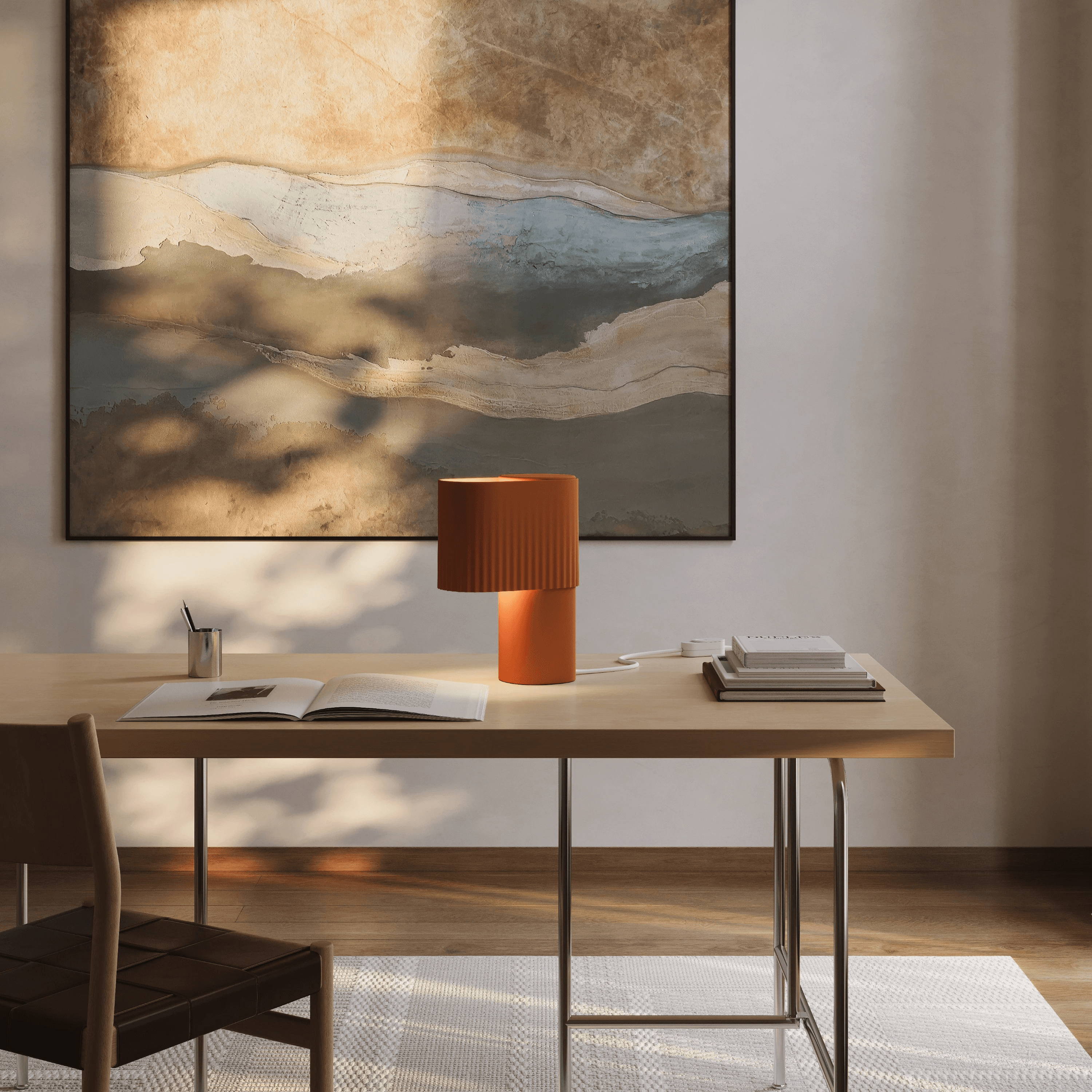
In this project, I will reproduce the Encore Table Light, originally designed by Sam Gwilt.
As this is a replication project, the process omits normal steps such as market analysis, ideation sketches, and various explorations.
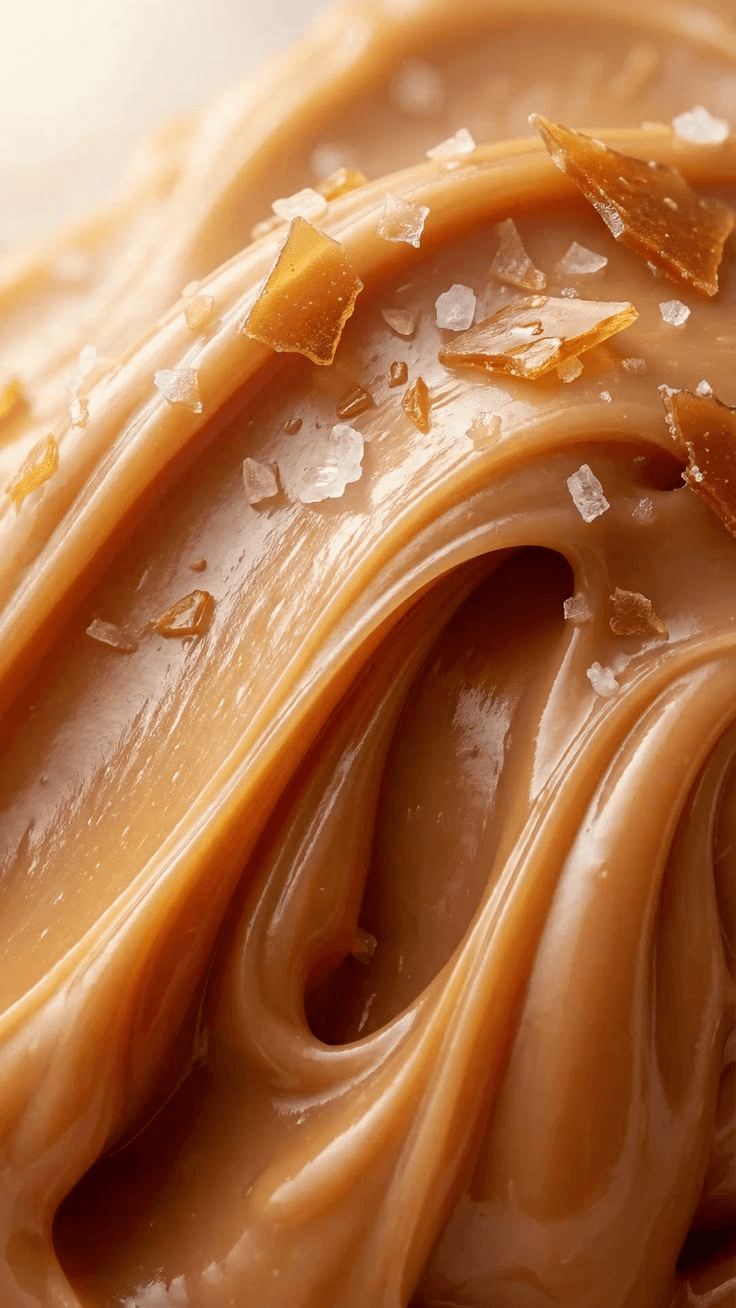
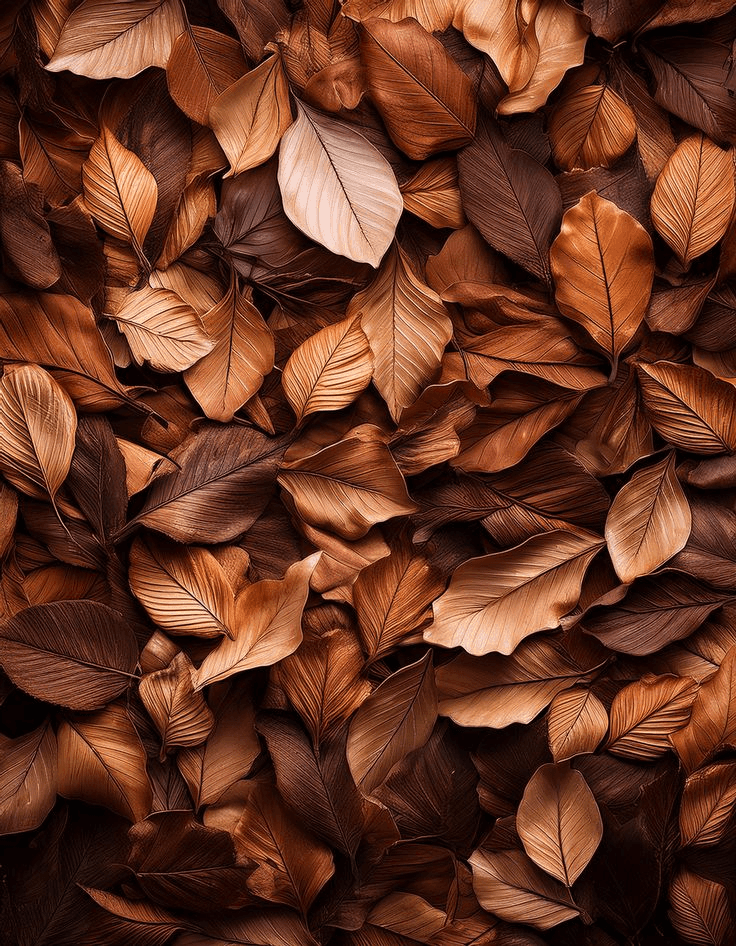
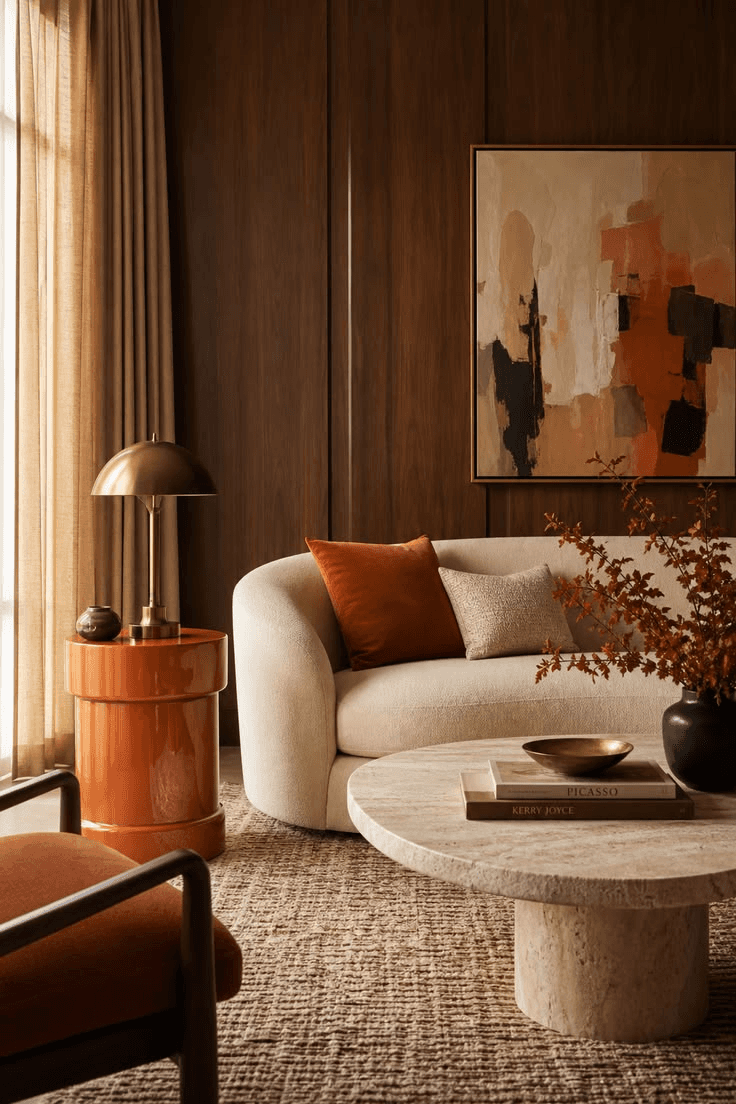
Instead, early steps will include analyzing the product's shape, color, and form for understanding.



Encore Table Light
Process Book
1
Planning

I chose 3D printing for the needed precision and flexibility in this project.
I settled on a sequence-based assembly design for adhesive-free assembly.
I took inspiration from the actual internal structure of the light, shown in this lightbulb changing procedure.
I observed:
A step-based assembly
Modular components


2
Design • Structure
All components were designed to assemble without interrupting the existing exterior design.
I used the .usdz 3D mesh file available on Gantri's product listing, originally for augmented reality use, to help CAD model the exterior.
Autodesk Fusion
Default and Exploded Views


Design - Structure
Base
This component supports the upper half of the light fixture.
I designed a centralized interface of slots.
Attachment to the base is secure, discreet, and invisible to the outside.
Design - Structure
Midbody


Hidden from outside view, this internal chassis serves as the structural backbone of the entire fixture.


Design - Structure
Lampshade
The centerpiece of this light fixture uses a secure three-point connection with the midframe.

For balance, the center of mass was designed to sit above the base.

Bottom view

Top view
Design - Structure
Cap
To "top" things off.
Secures the upper light diffuser plate, its clips, and seamlessly hides the midbody.

As the midframe accommodates the lampshade and cap in the same slots, the cap further secures the lampshade in a space-efficient way.

3
Design • Components
Design - Components
Upper Light Diffuser and Clips


Due to weight distribution, the light diffusing plate requires additional fixation when installed.
Before the cap is installed, the plate is secured by the midframe's slot and a pair of clips.

The cap secures the plate and prevents the clips from falling out.

Each clip "sandwiches" the plate and the midframe.
Design - Components
Lower Light Diffuser and Lightbulb Cradle
The bottom light diffuser plate is installed directly onto the base.
The lightbulb socket is fitted into a cradle component that slots into the base while also holding the lower plate down.


4
3D Printing
Manufacturing
Using a Creality K2 Plus with PLA filament.
Knowing I would prime and paint externally-visible components, I was not particular about filament color choices.
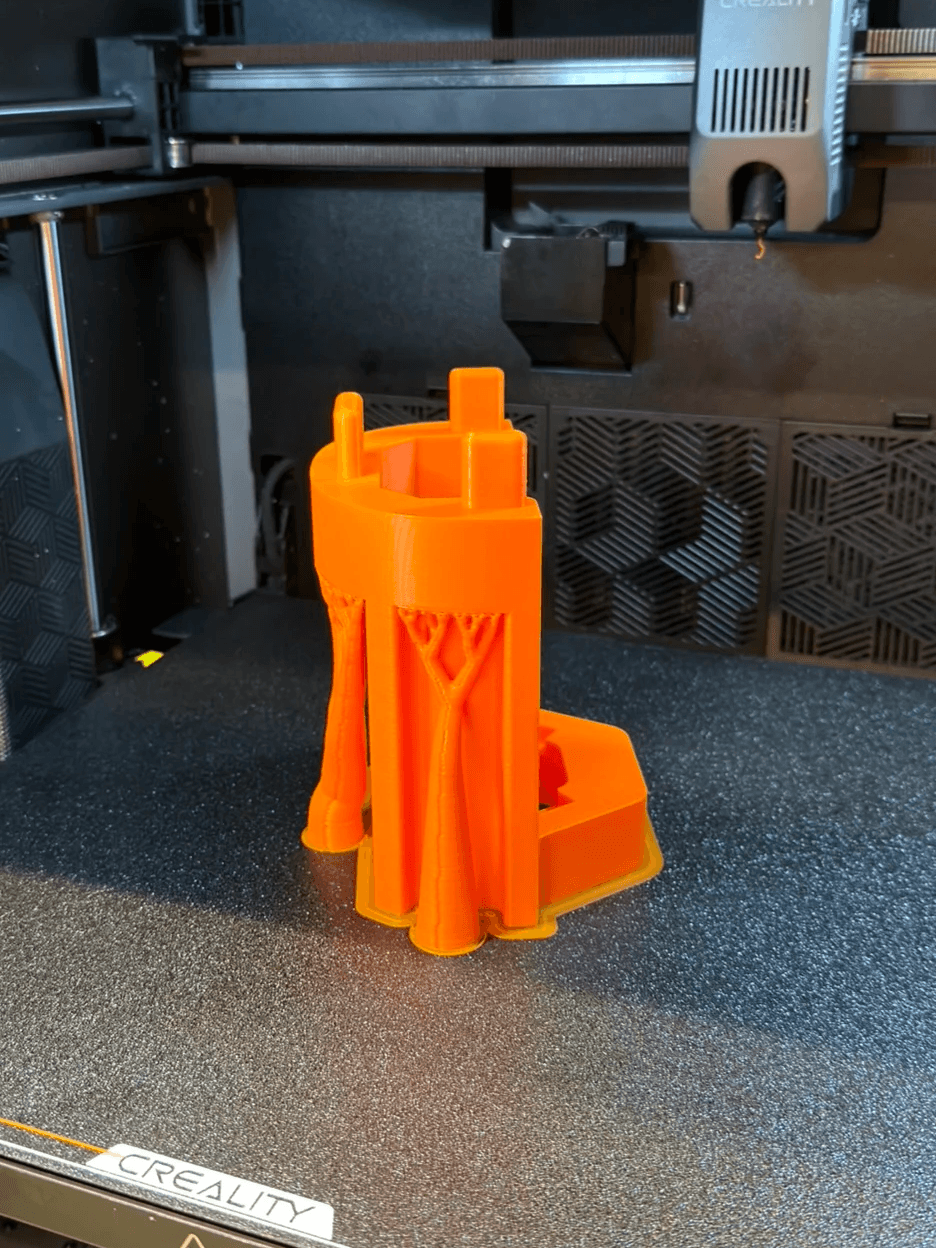
Midbody

Base (attempt 2)

Lampshade and Cap
There's layers to 3D-printing. (pun intended)

Support and Brim Removal
I used a box cutter to clean up my printed components.
Lesson learned:
Base, first attempt:
I initially designed relatively huge overhangs, causing issues.

I resolved this issue by minimizing horizontal overhangs.

5
Light Diffuser


Outlines drawn in Autodesk Fusion.
Converted into .dxf files for laser cutter use.
Left to Right: Bottom Diffuser and Top Diffuser
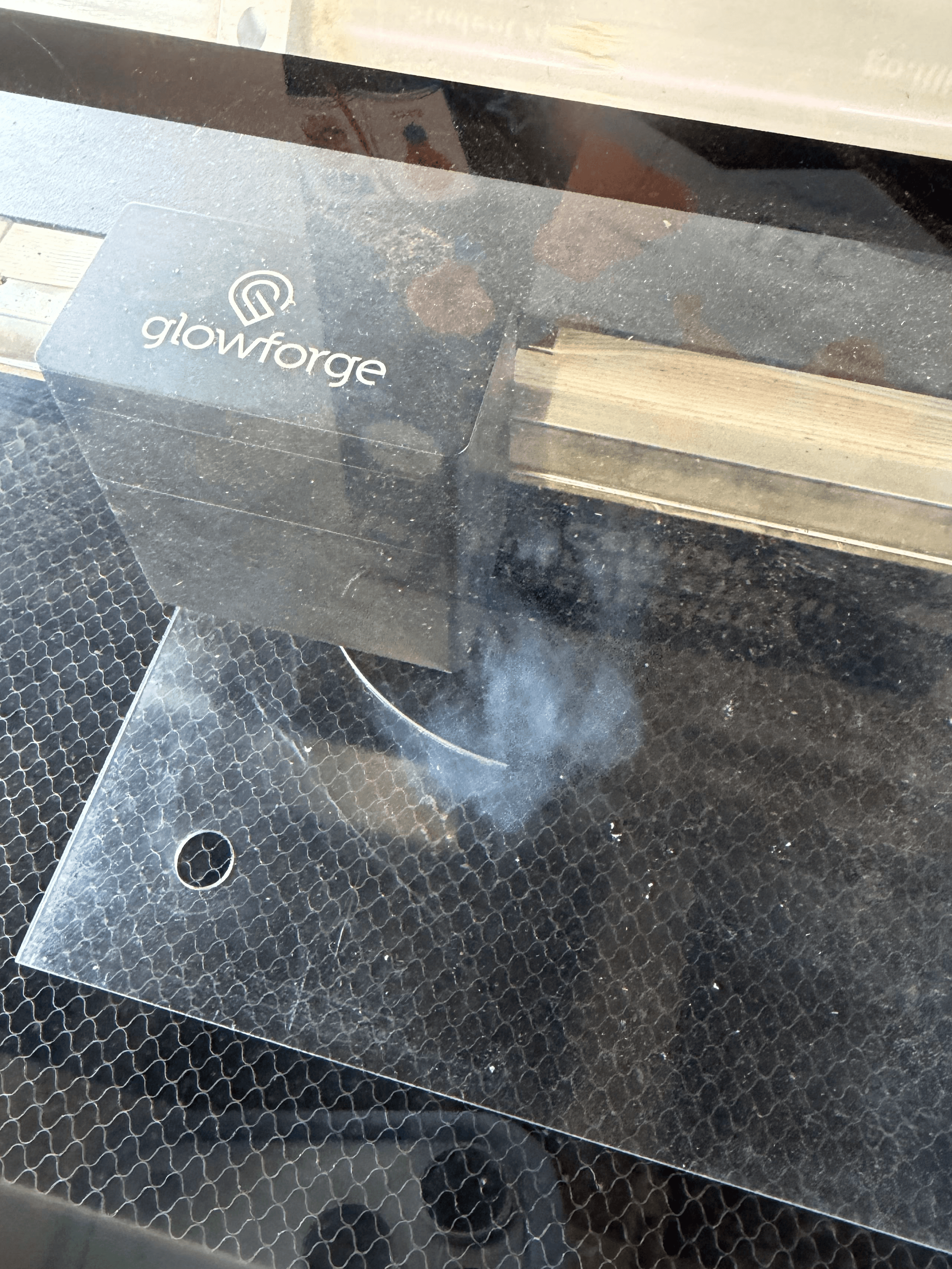
Laser cutting
Cut size set to 0.1mm smaller than its intended space for tight friction fitting.
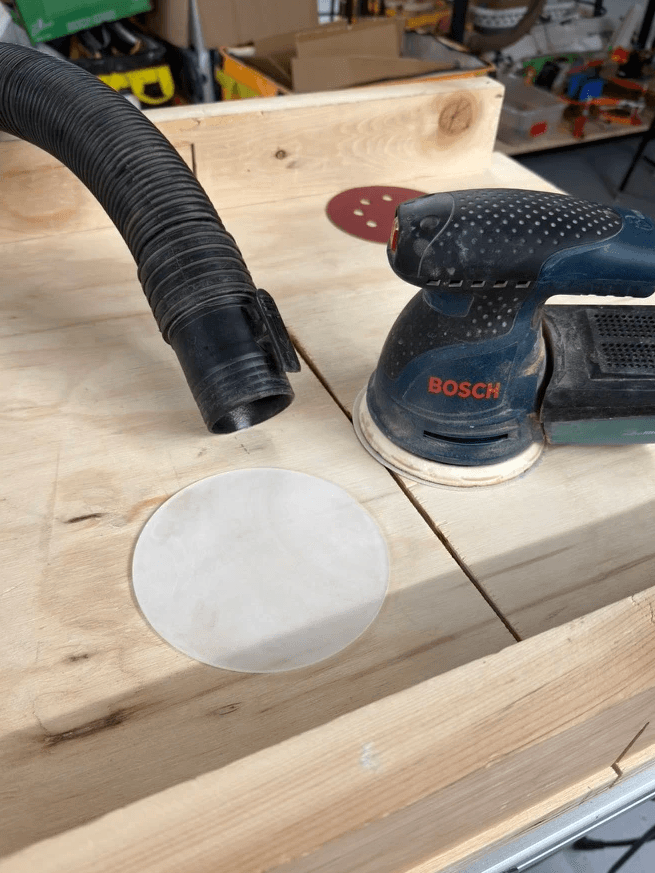
Disk sanding
Using a fine-grit disk sander to frost both sides. Rinsing in between.
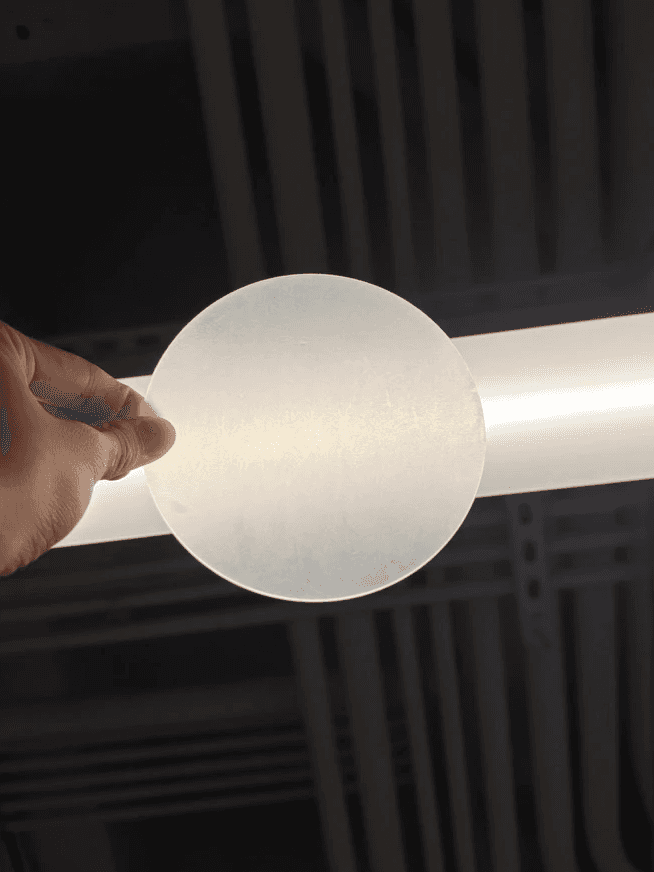
Finish
Effectively diffuses light while being smooth to the touch.
Surface Finishing • Priming

To begin the surface finish, I repeatedly used Rust-Oleum’s 2-in-1 Primer+Filler, 320-grit sandpaper, and filler paste.
Repeated priming and sanding with finer sandpaper resolved most surface imperfections.
Challenges:
Layer lines remaining visible.
Sanding around ridges.


6
Surface Finishing • Painting

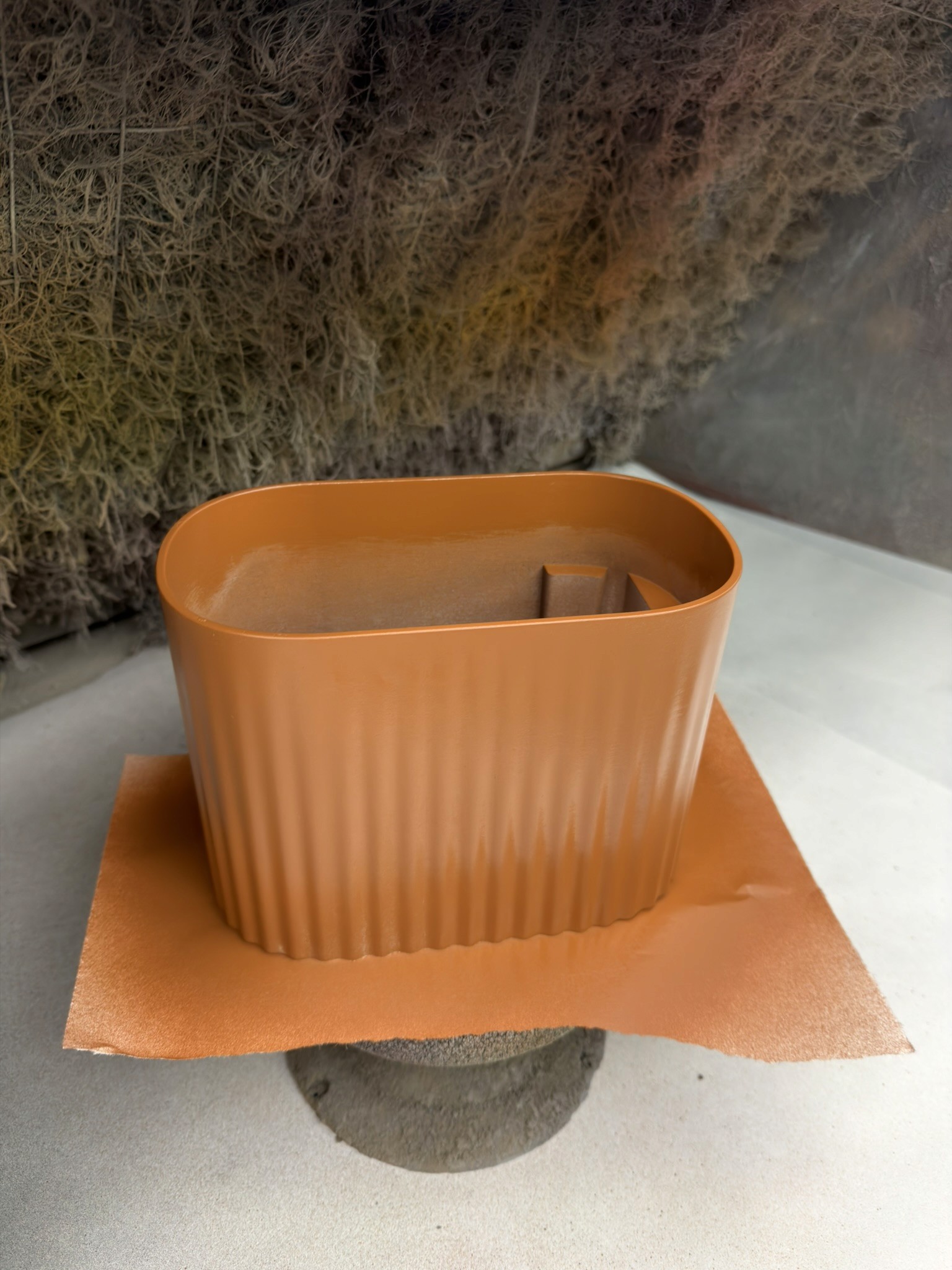
I used Rust-Oleum’s “warm caramel” satin spray paint to color the lamp.
Similar to priming, painting required multiple coats for solid color and sanding in-between coats for a flawless finish.

6

Lightbulb
A standard A19-type bulb, E26 socket, 40W (adjustable), 3000K (adjustable).
I recolored the midbody interior with white paint to prevent orange color from showing through the diffuser.
Preventing unintentional colors

Clear coating
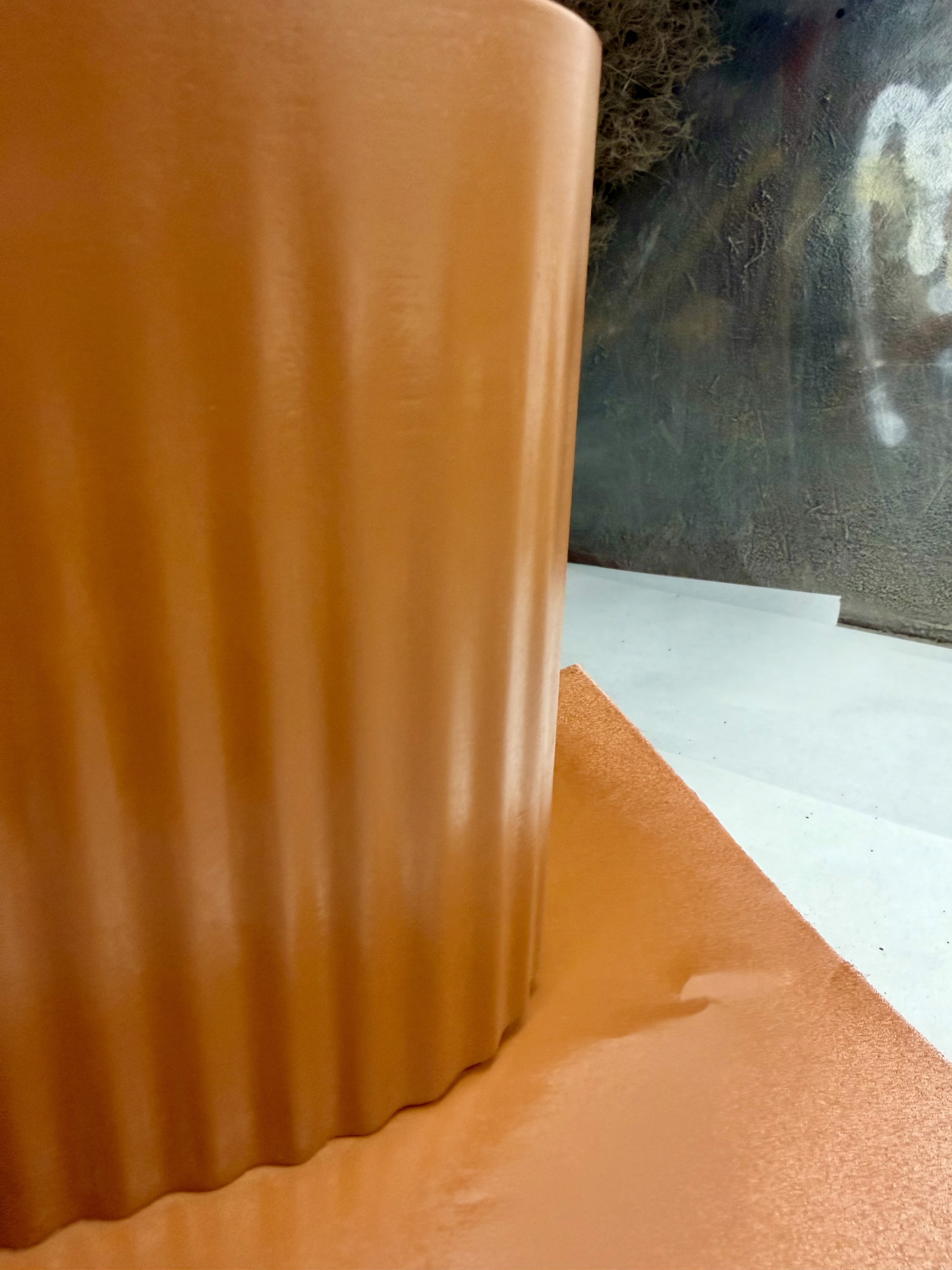
I applied a matte coating for surface protection and additional matte texture.


end of this process book
