scroll for more
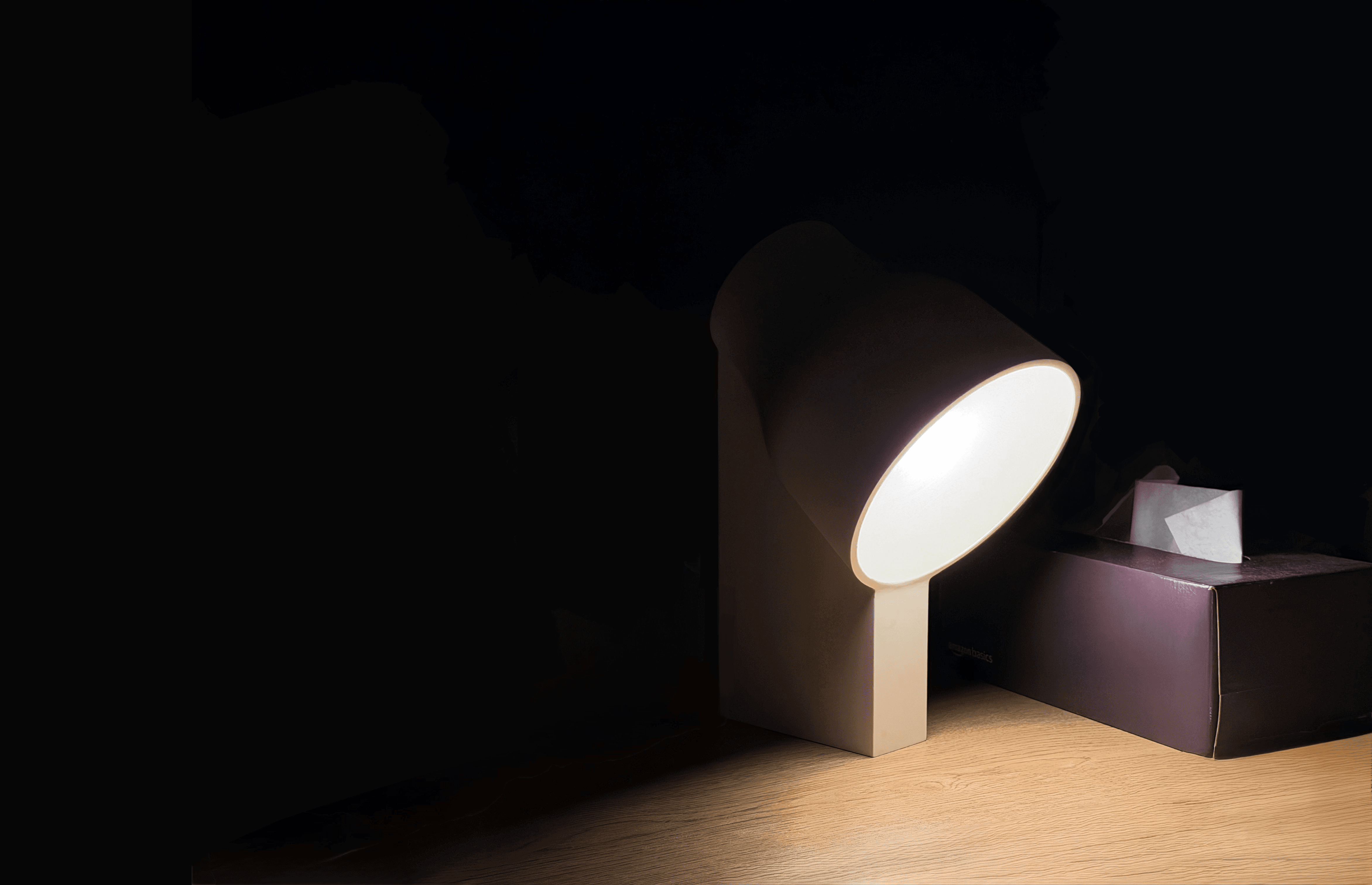
In this project, I will reproduce the Carve Table Light, originally designed by Ammunition Group.
Individual Coursework Project
ARTD 101 • Intro to Industrial Design
Professor Savio Mukachirayil
University of Illinois Urbana-Champaign
7 weeks • Spring 2026
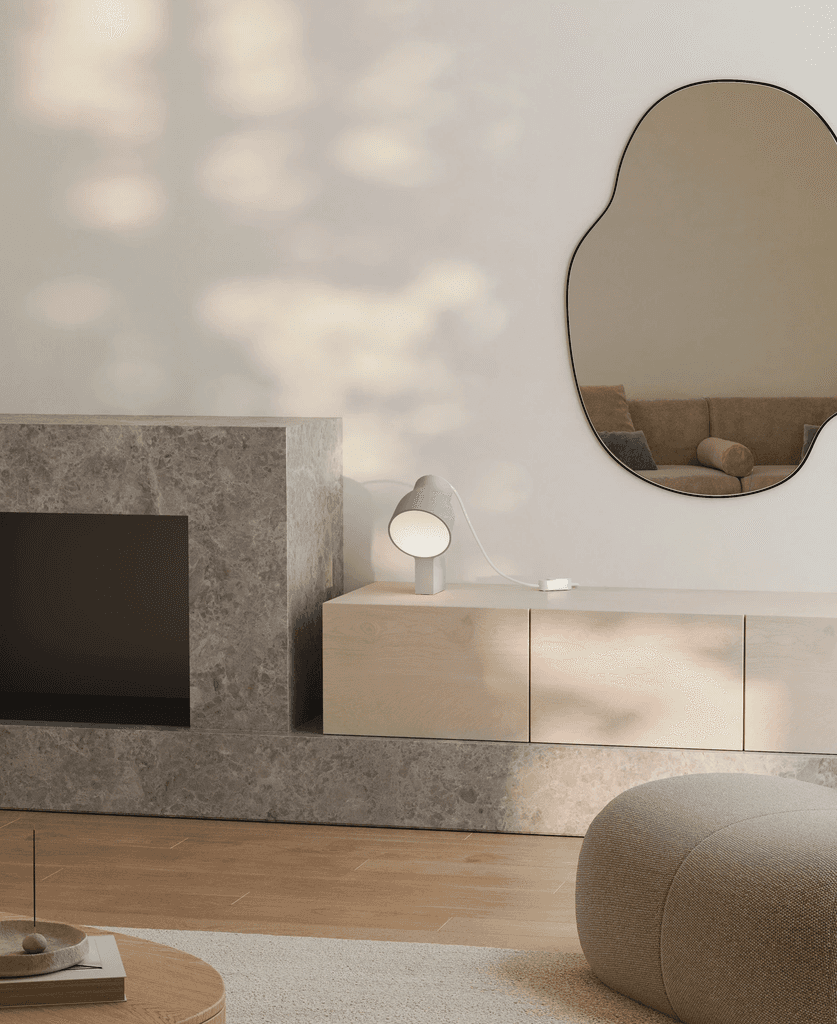
Right: Example Render, courtesy of Ammunition Group and Gantri.com.
Shape
Color
Texture
Product Analysis
The Carve Table Light presents a minimalistic unibody design without any visible separations.
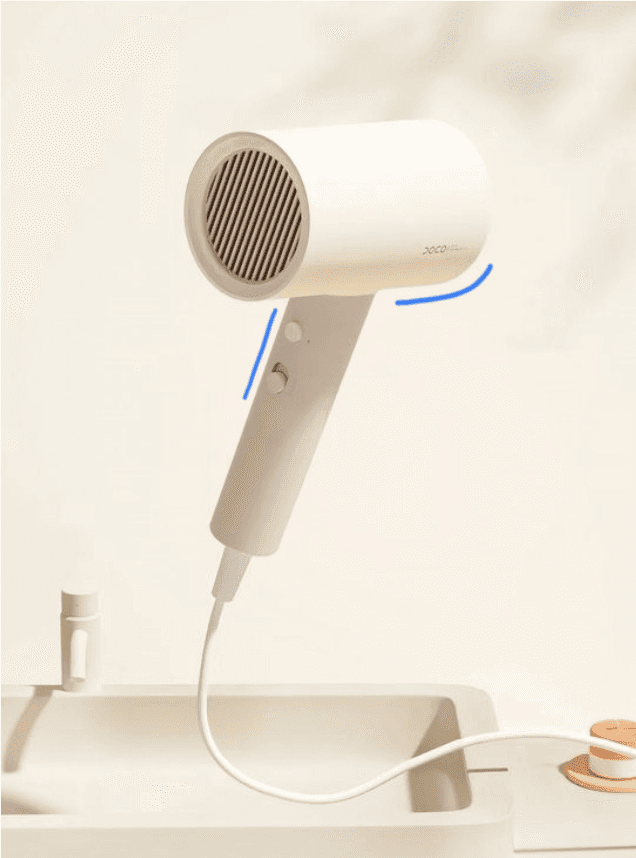
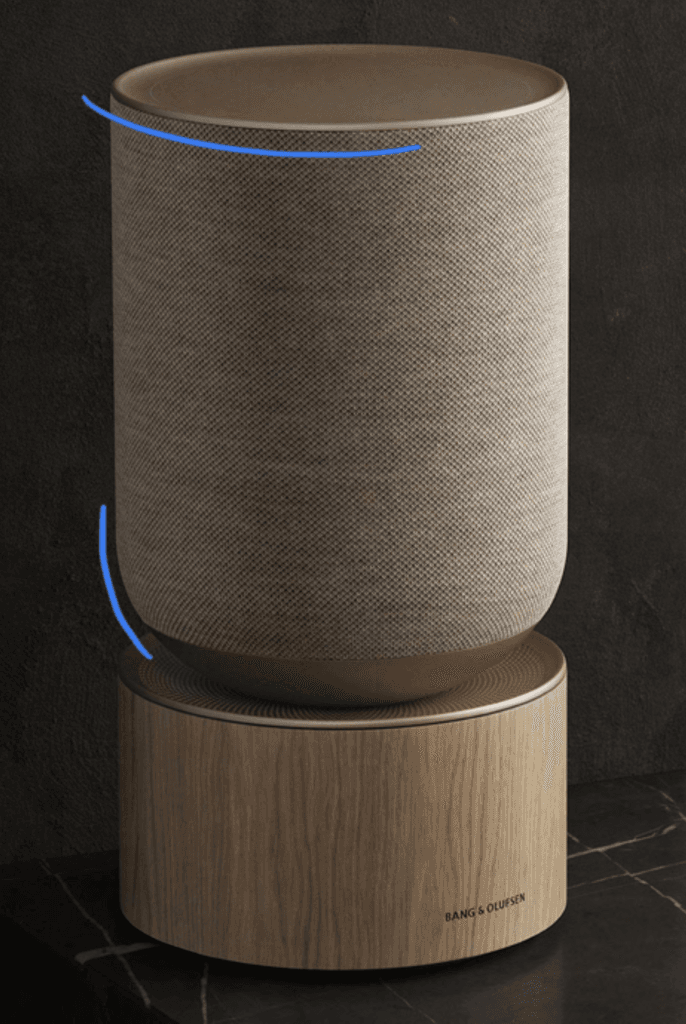
A downwards-tilted cone with gradual curves dominates the structure. The shape maintains a soft visual presence.
A subdominant rectangular base supports the cone, defined by flat surfaces and sharp edges. The seamless connection between the base along the length of the cone enhances a sense of structural unity.
The juxtapositioning conveys the gentle character of the light, allowing the lamp to express a calm and passive emotion.
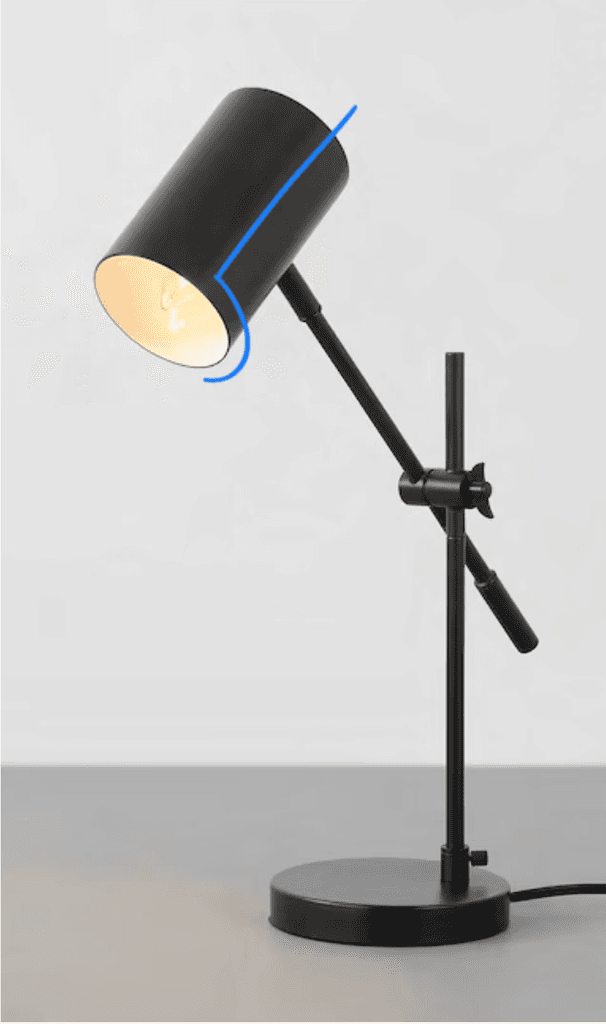
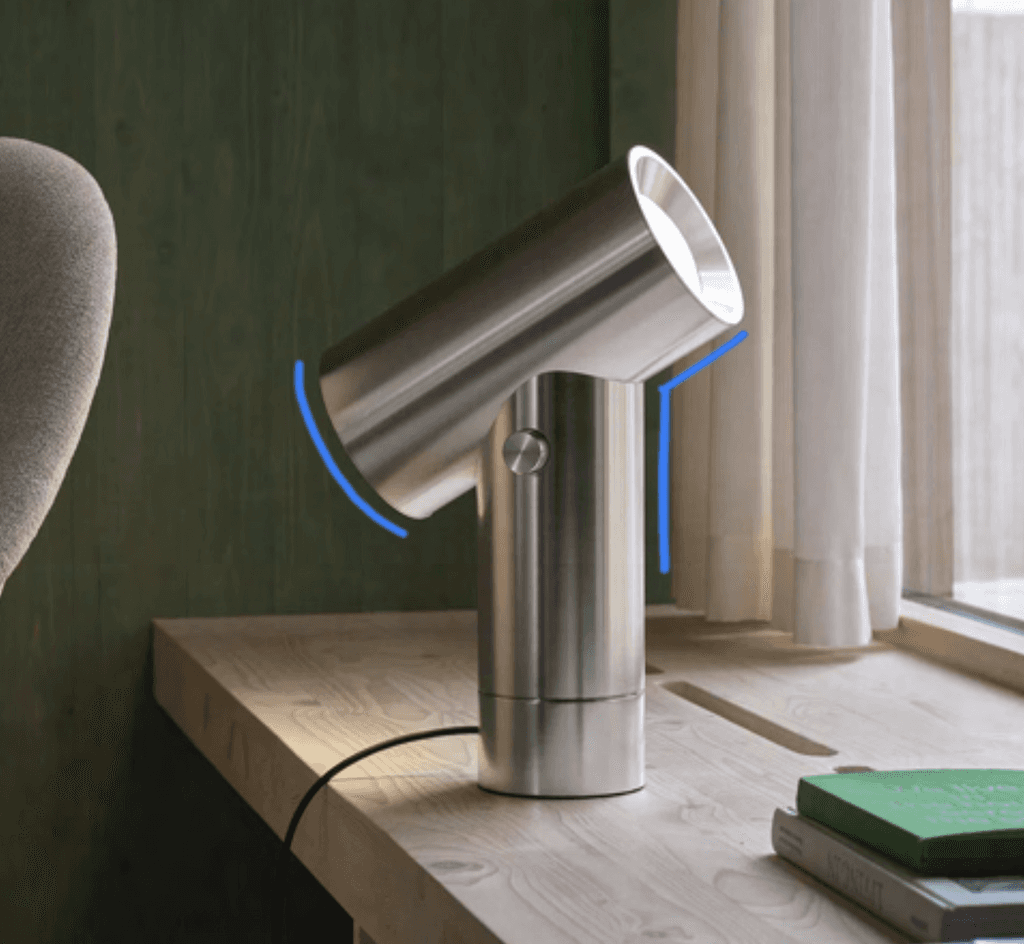
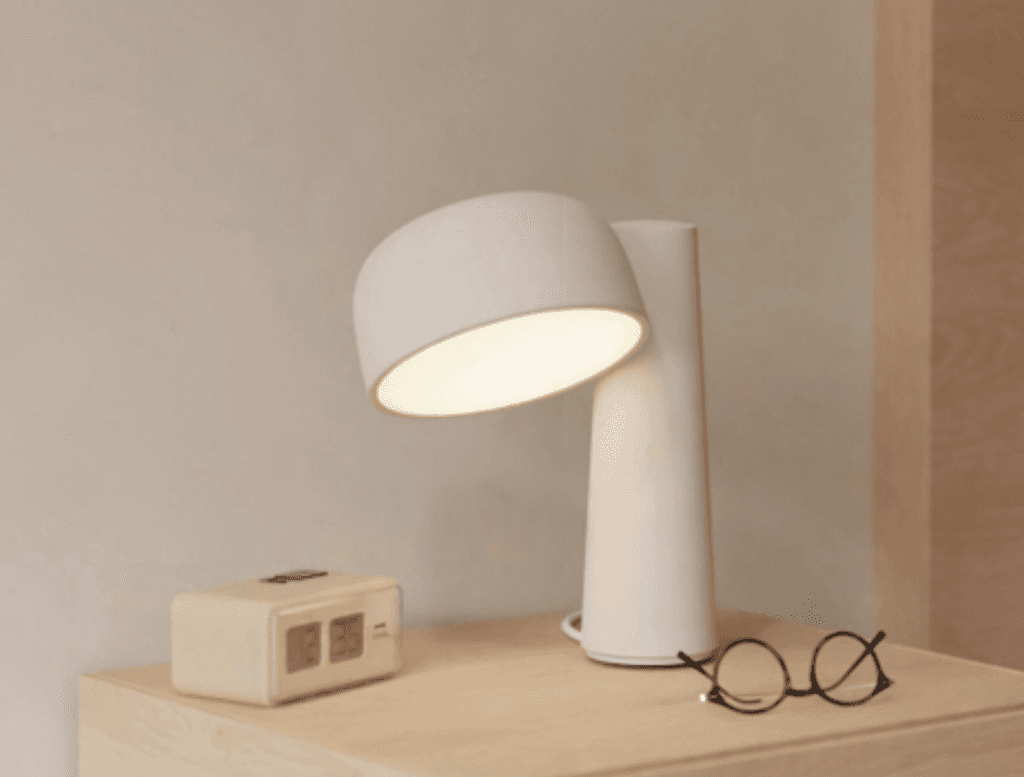

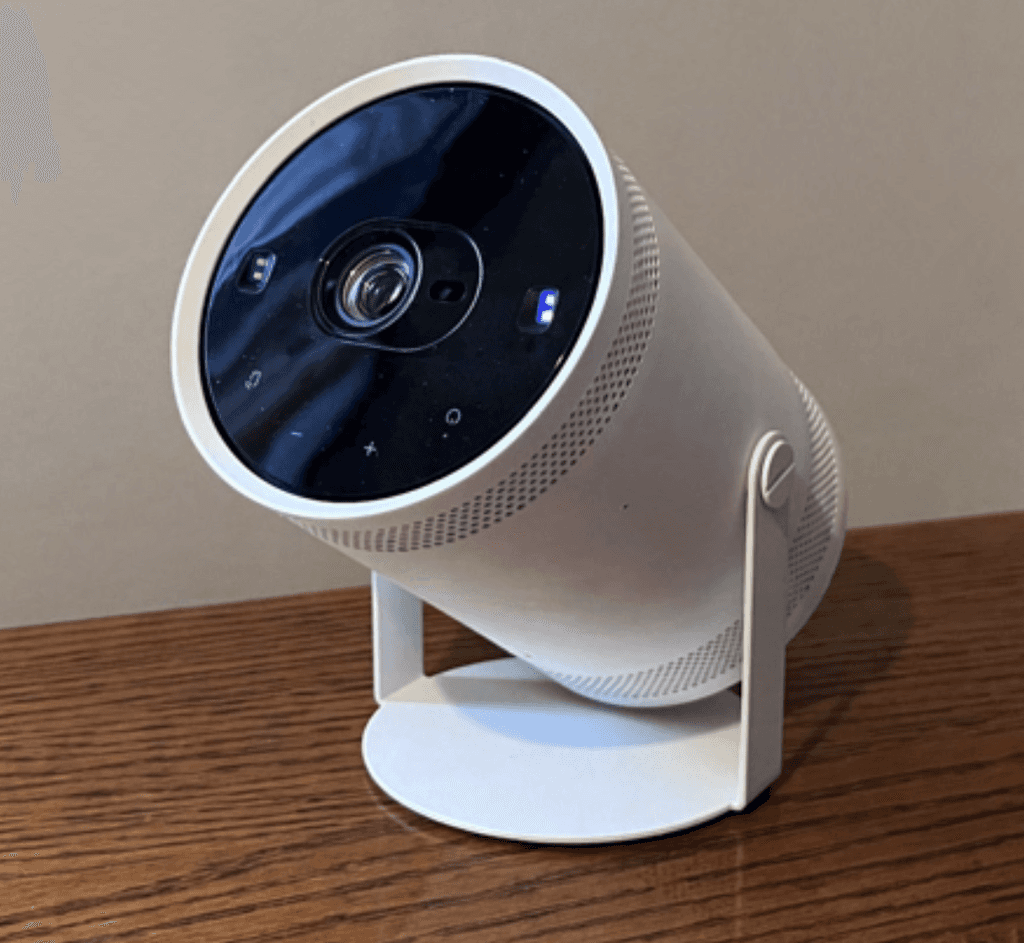
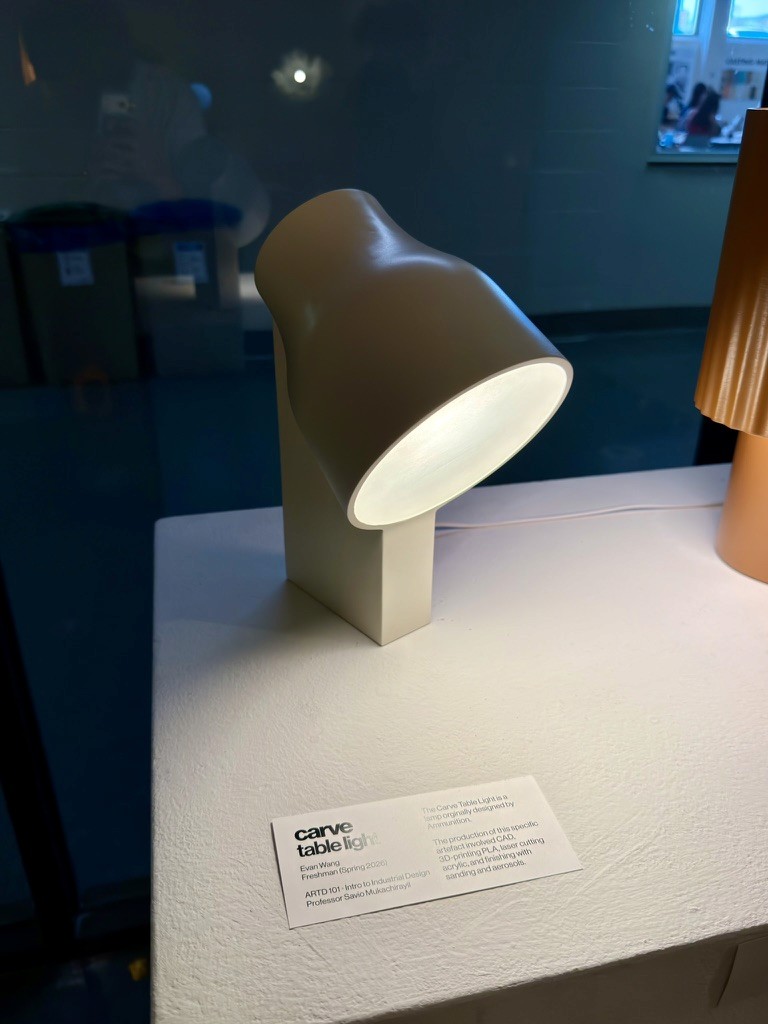
The Carve Table Light is finished in a soft off-white color labeled as “stone.” Aside from the large round light diffusing plate, the entire body of the lamp is colored an off-white.
With a warm, 3000K lightbulb, the light emits a bright and cozy glow, while appearing a translucent light gray when turned off.
The lamp exudes cleanliness, simplicity, and brightness, which also allows for easy integration into a variety of different environments.
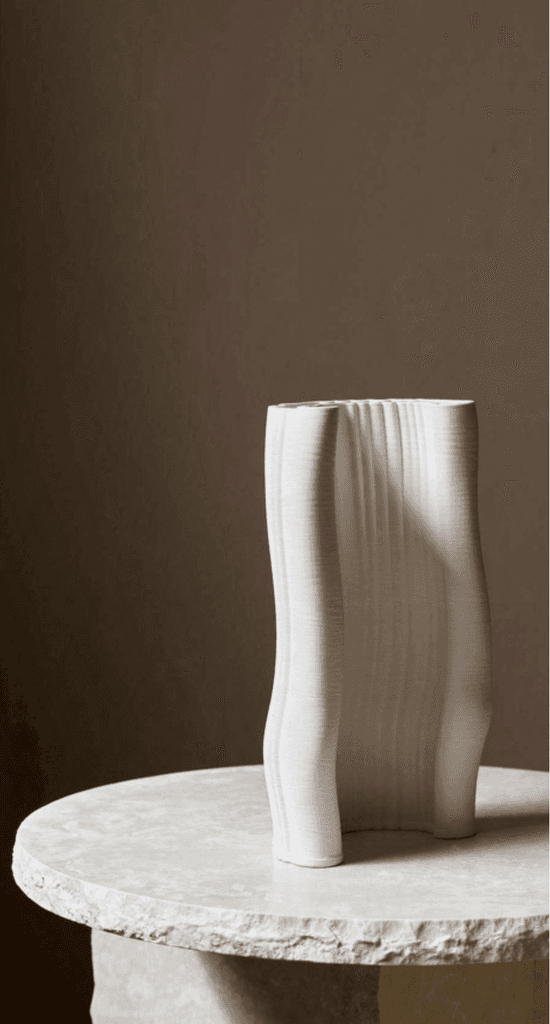

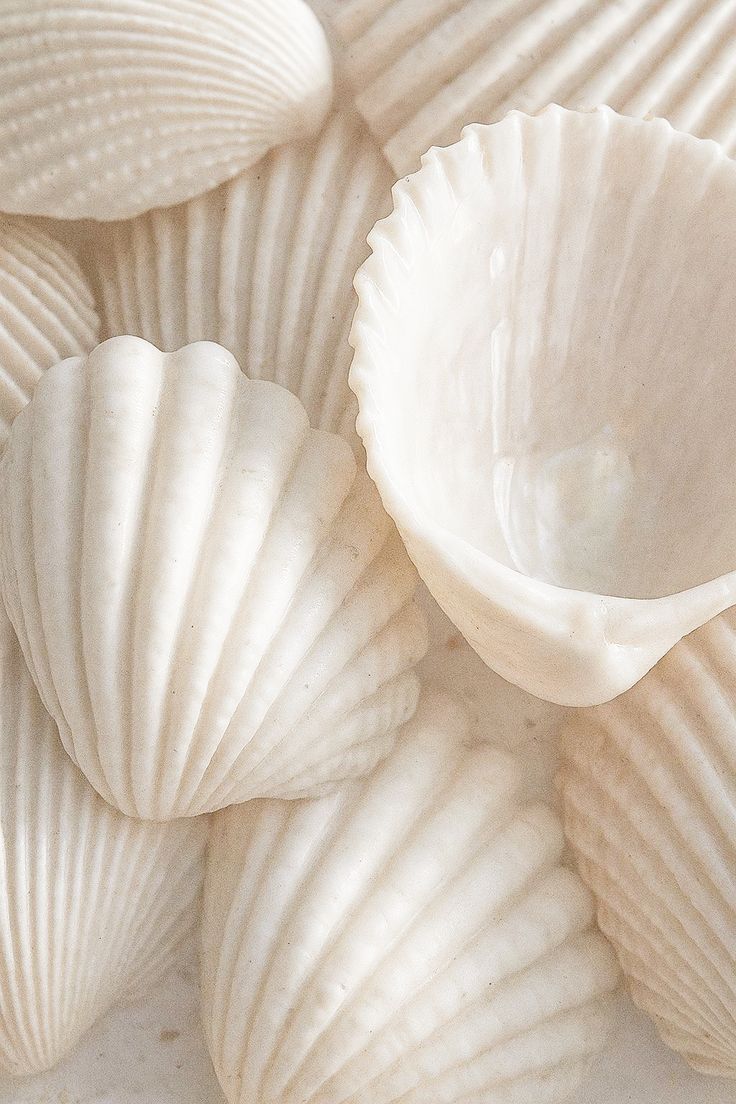

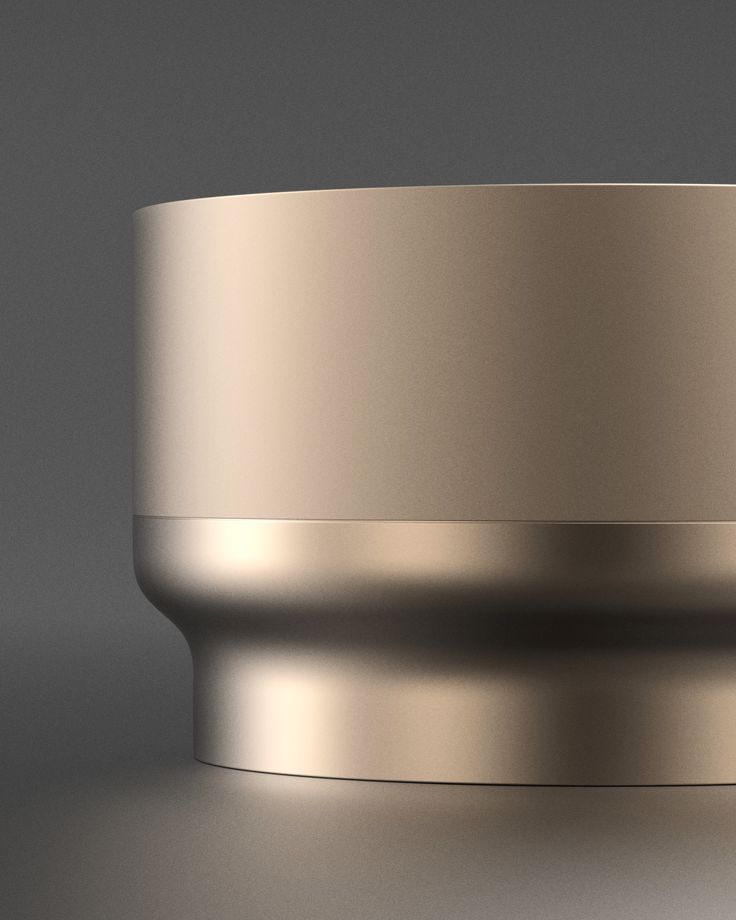
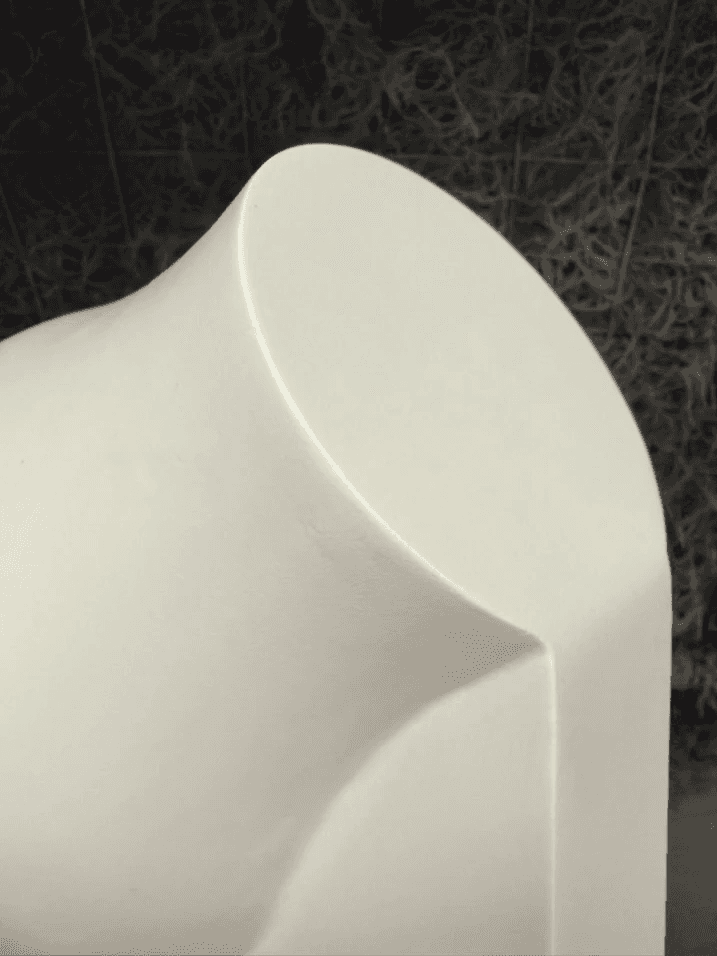
The Carve Table Light features a matte finish that is unreflective and visually unobtrusive. The subtle surface texture negates reflective glare and allows the product to blend naturally into surrounding spaces.
The matte finish also encourages interaction, as it resists visible fingerprints and blemishes, making users more comfortable touching and adjusting the lamp if needed.
The continuous matte surface across the entire form reinforces the lamp’s unified, single-body design and enhances the clarity of its overall shape.
Process Book
my process in
Six Main Steps
1
Drafting
Defining + Ideation
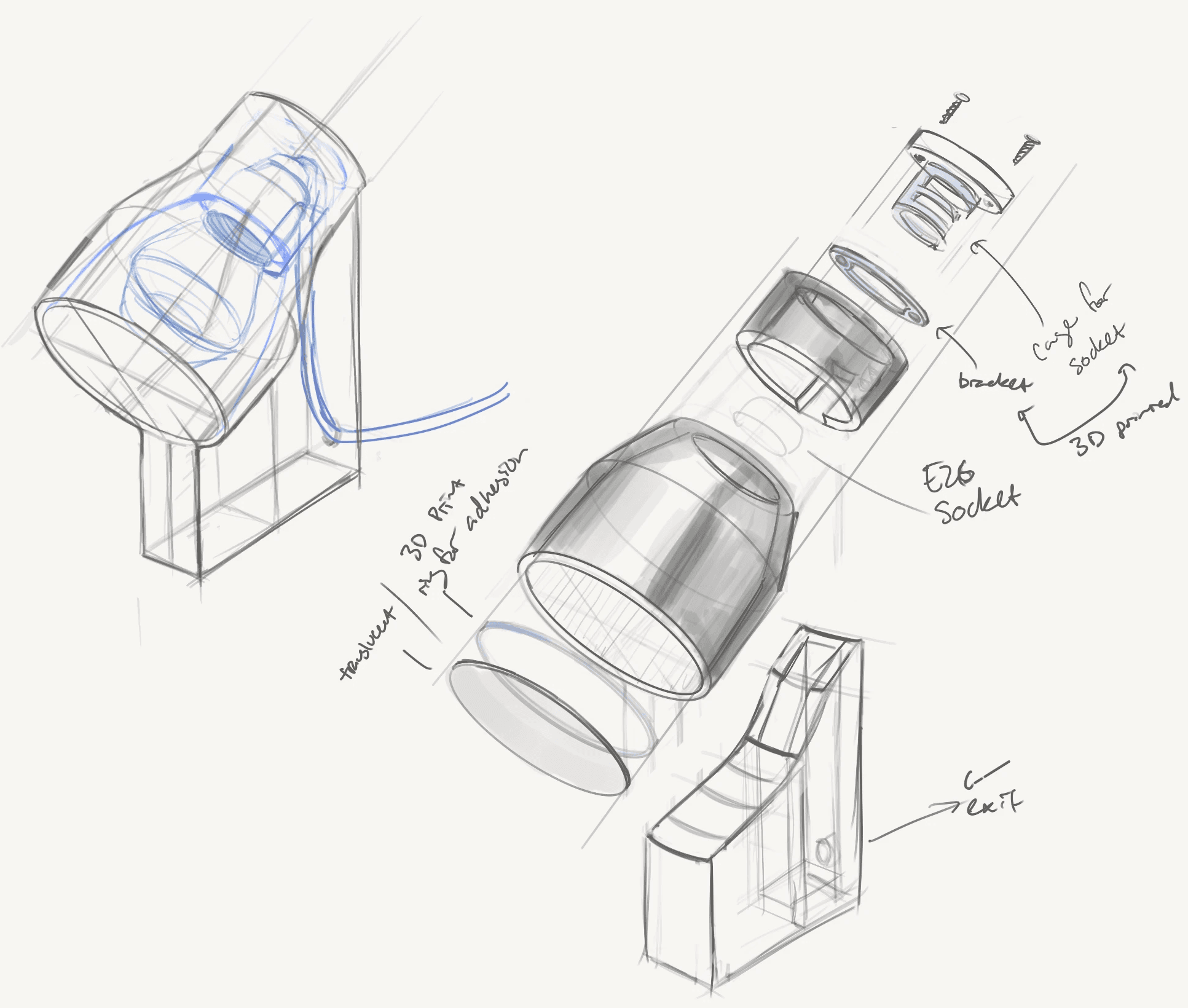
Pre-CAD sketches visualized different manufacturing methods.
3D-printing was chosen for efficiency and precision.
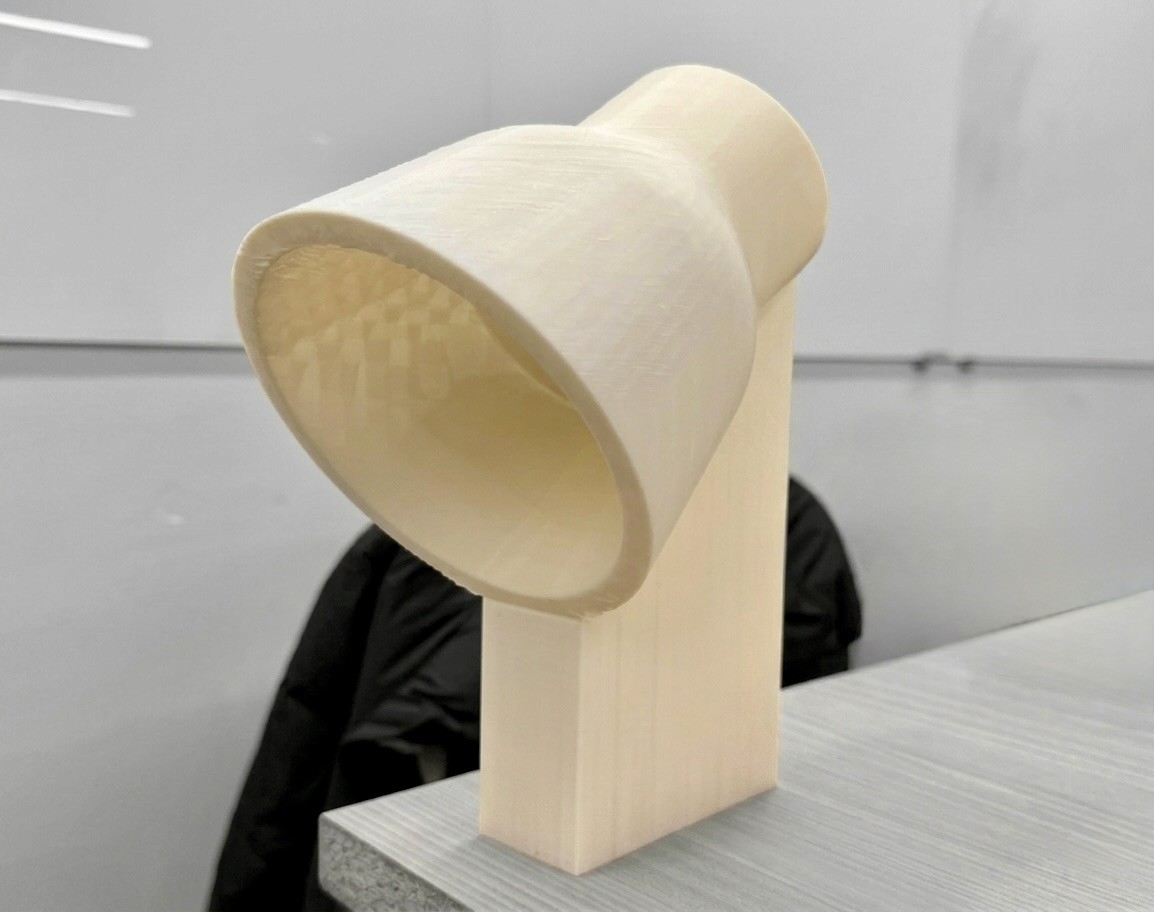
A size-accurate reference was 3D printed to help with spatial understanding.
2
CAD
Ideation + Prototyping
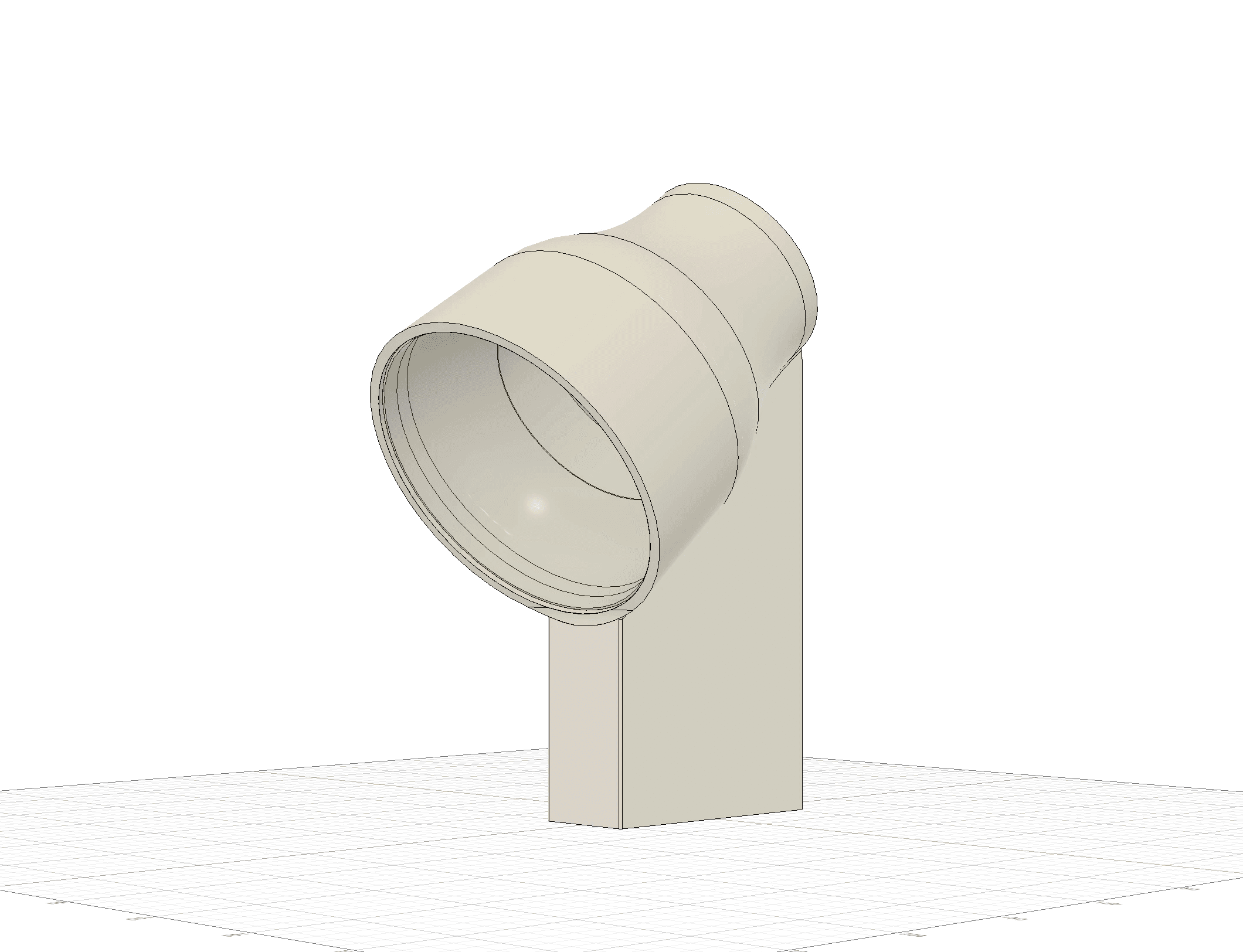
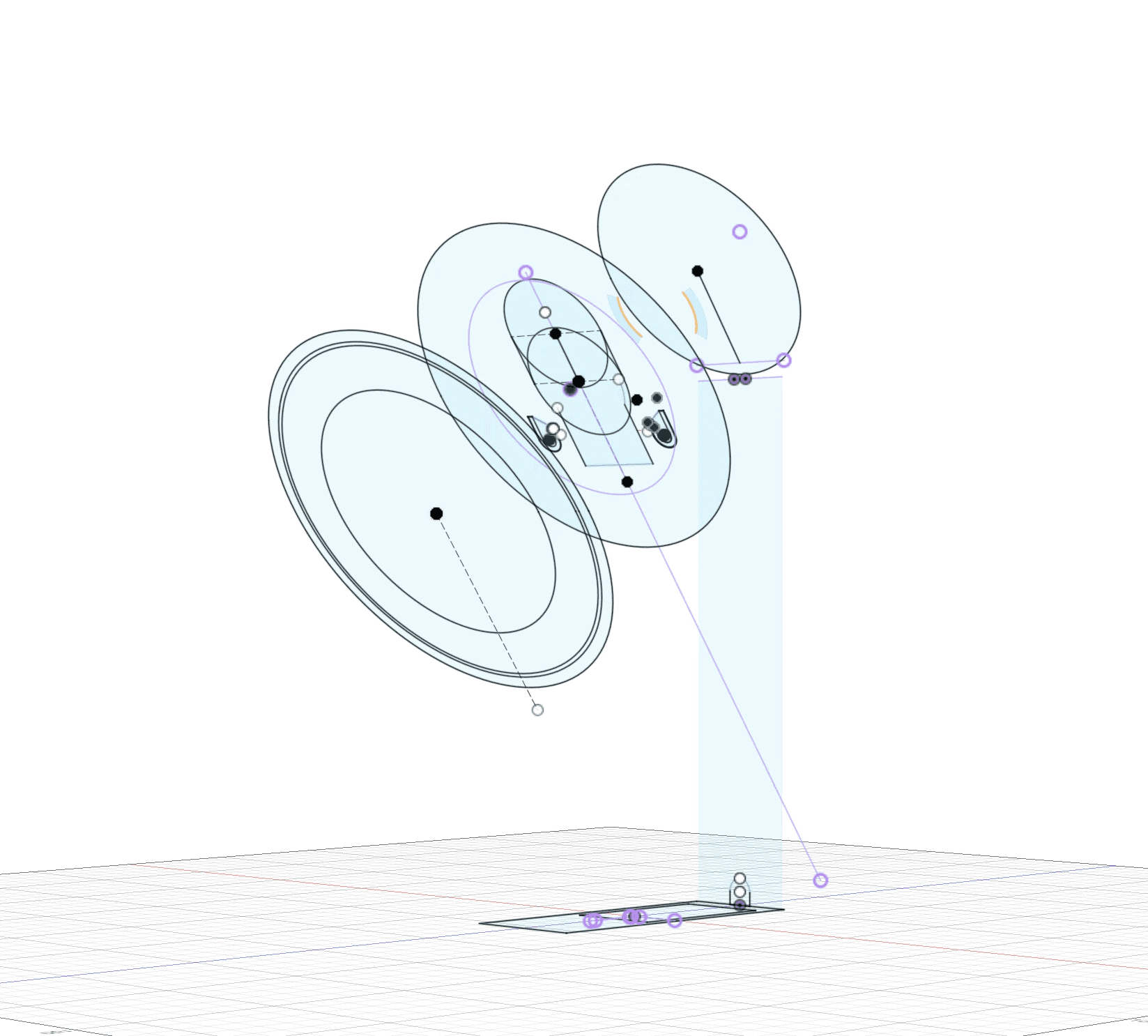
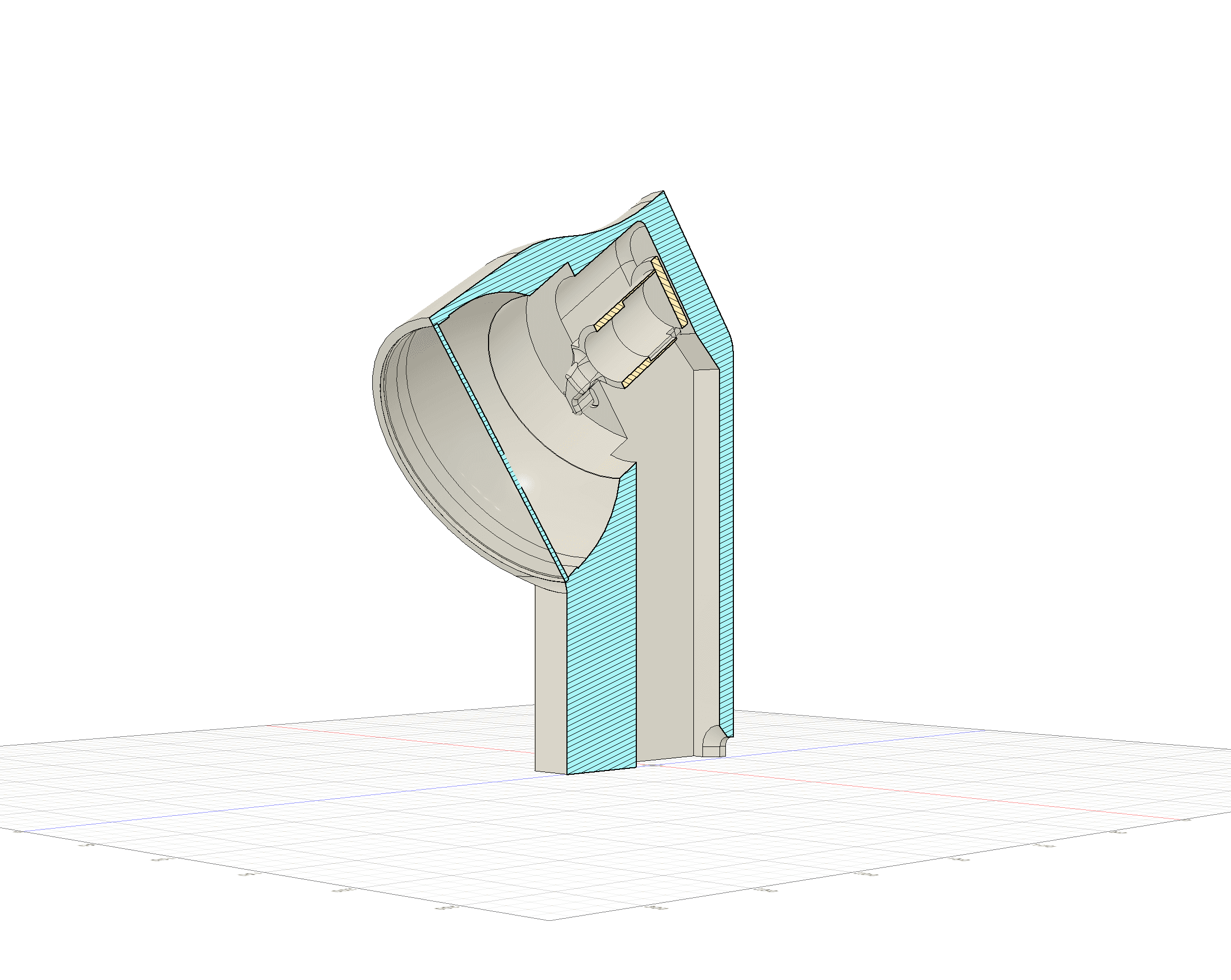
CAD model
Sketches (top)
Autodesk Fusion360
Cross-section analysis (bottom)
2.5
The Lightbulb Socket
Prototyping + Manufacturing
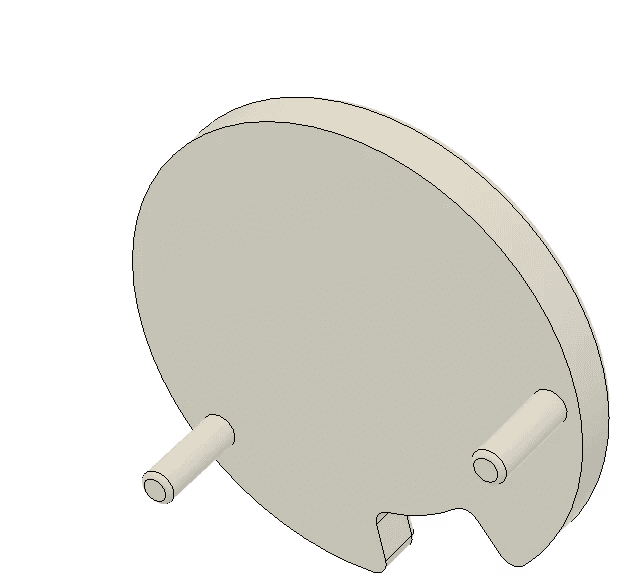
Cap
Prevents movement
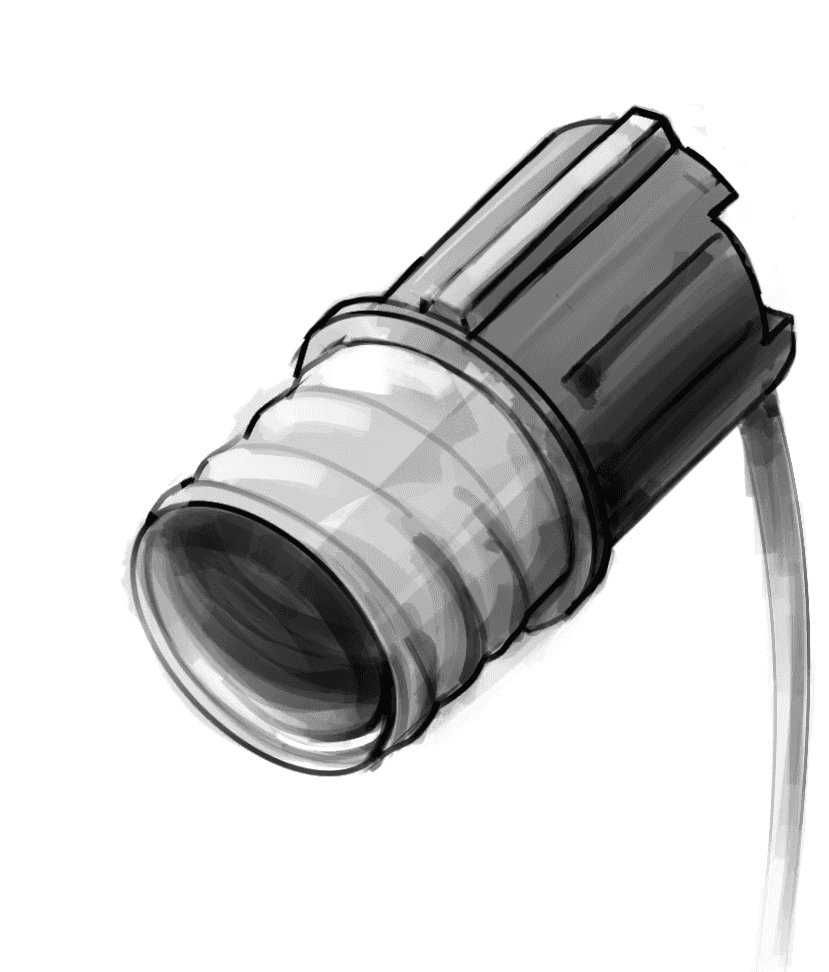
Lightbulb Socket
Type E26, without its original housing
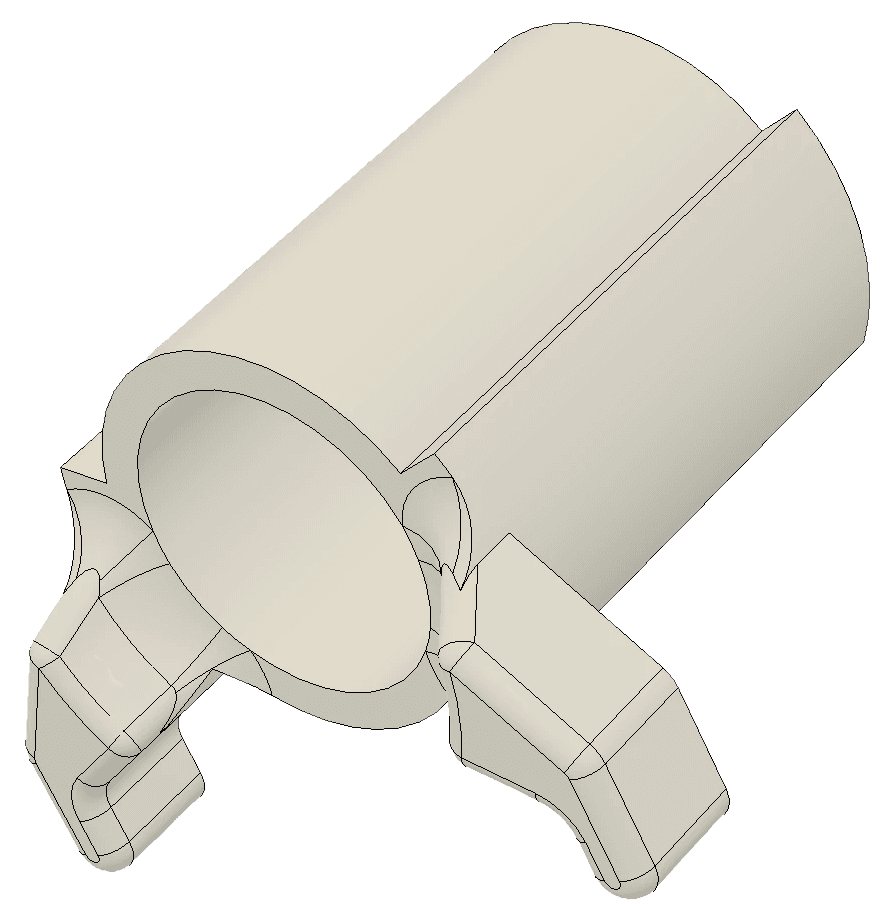
Main Housing
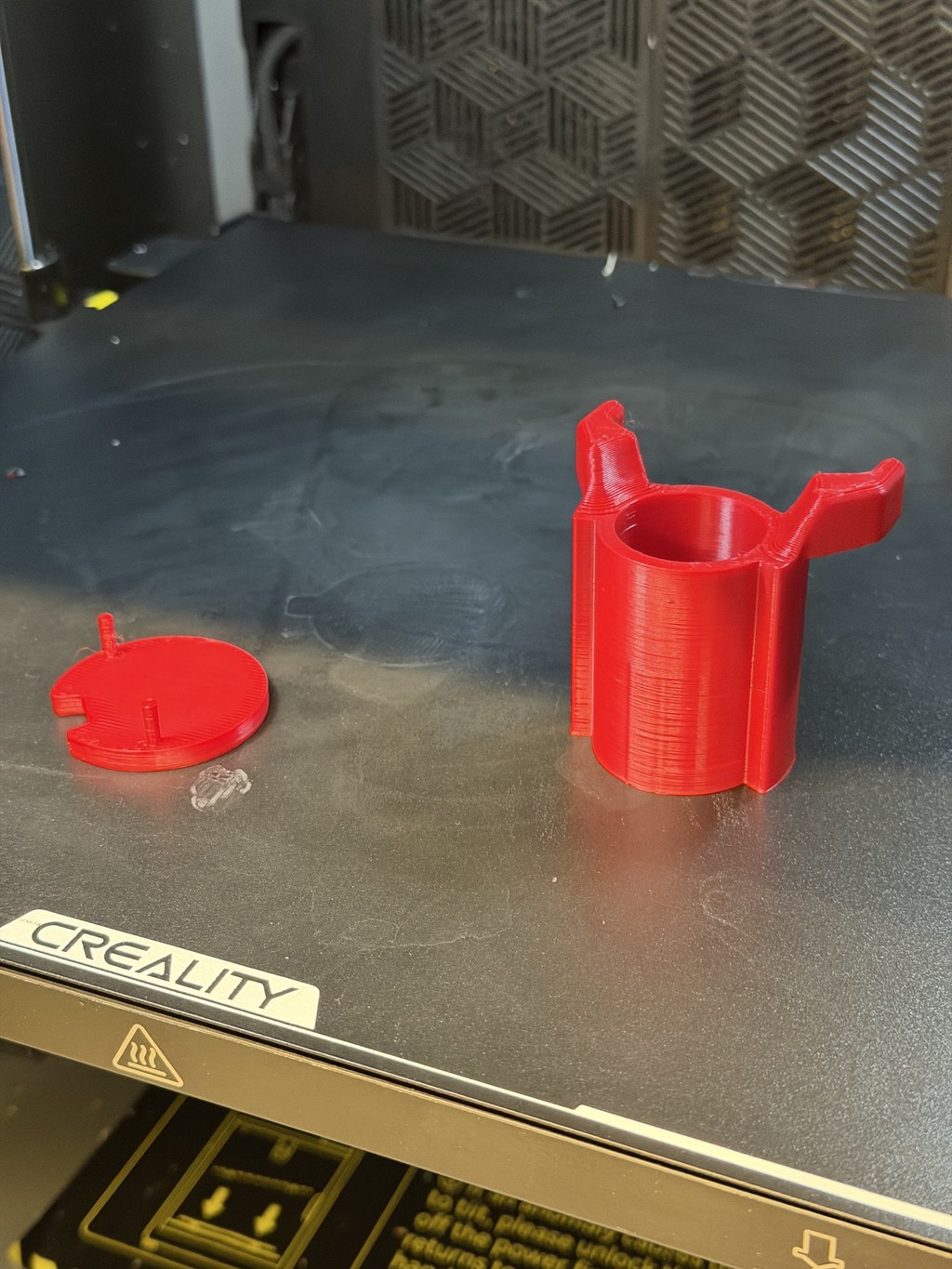
With size allowances of 0.15mm for secure fitting
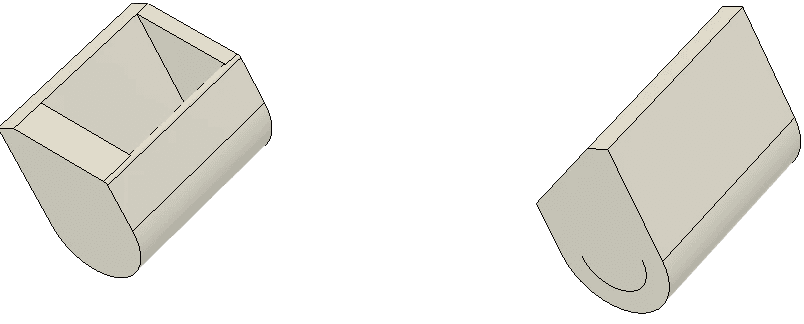
Slots
Attached to internal surface of main body
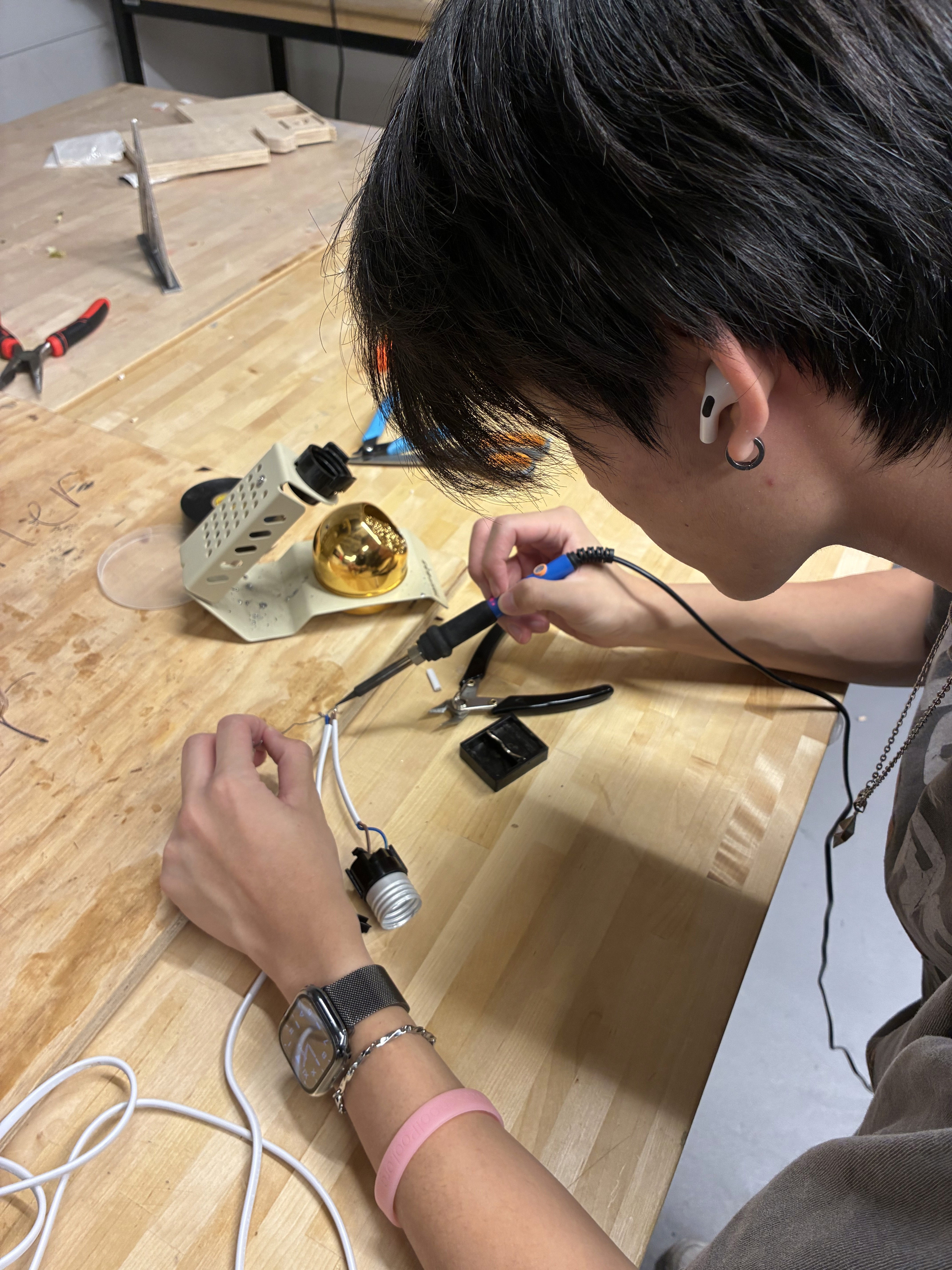
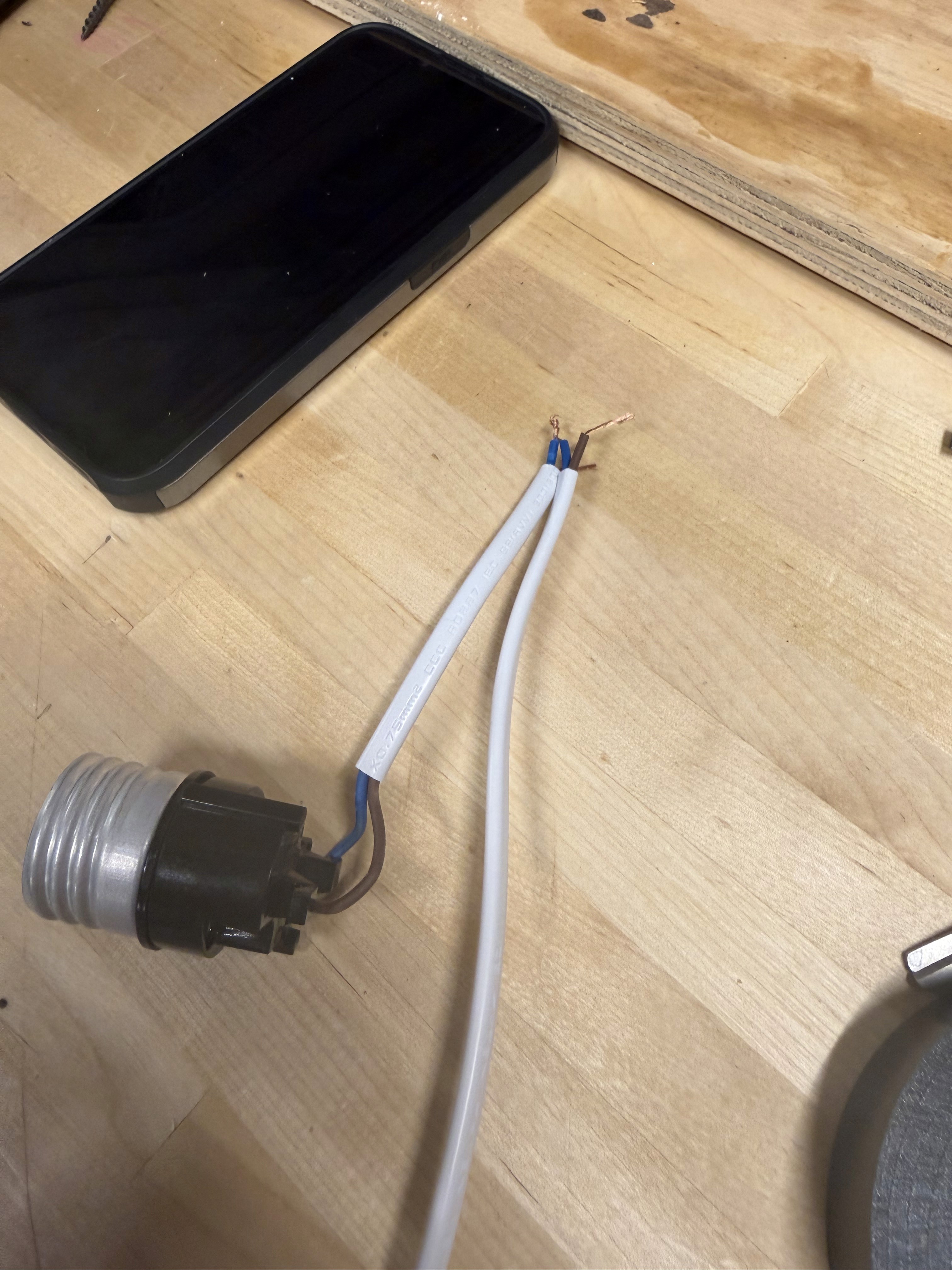
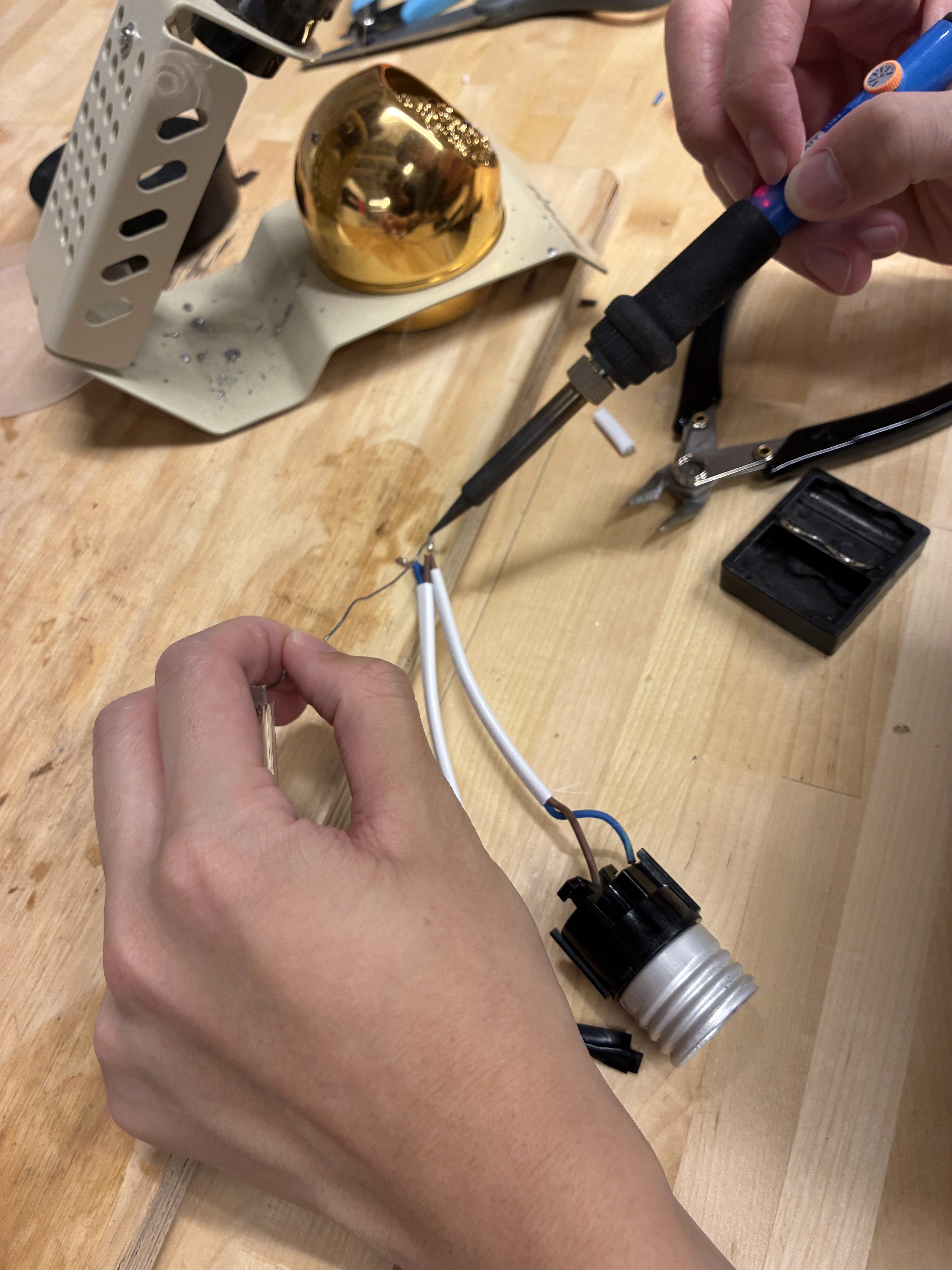
The stock plastic casing was too large.
I removed the socket’s casing and reconnected the cord using solder.
3
3D Printing
Manufacturing

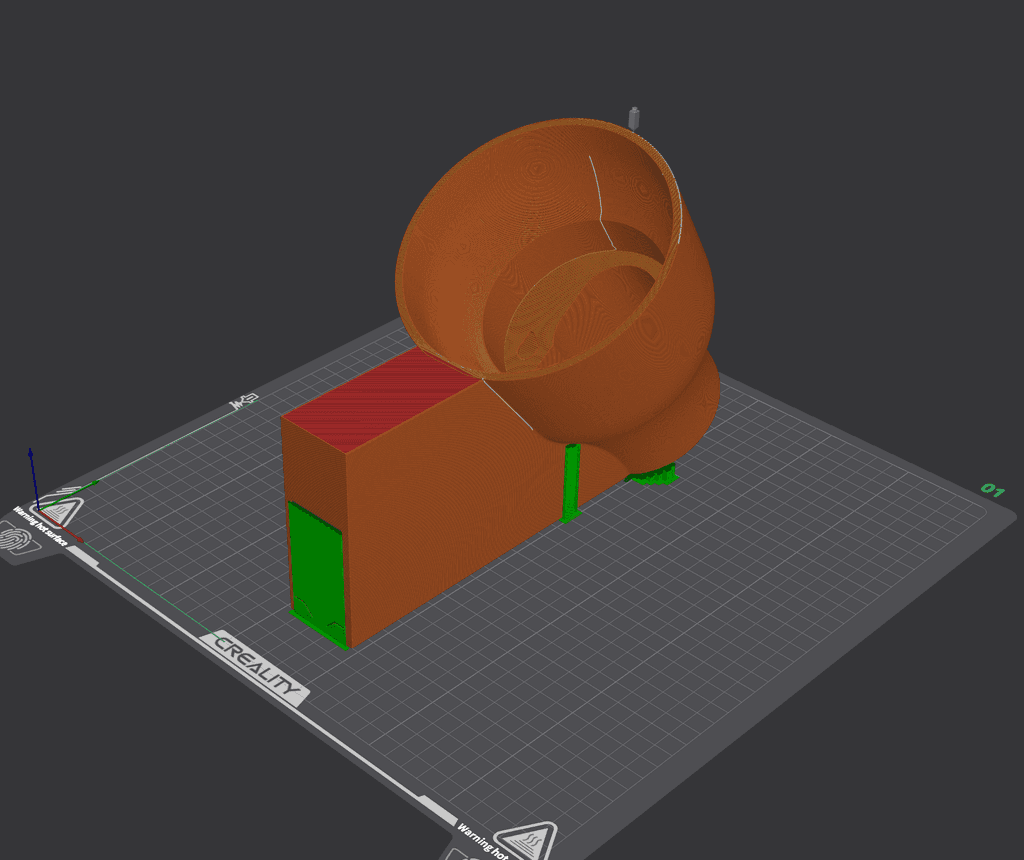
All bodies printed on a Creality K2 Plus with PLA filament.
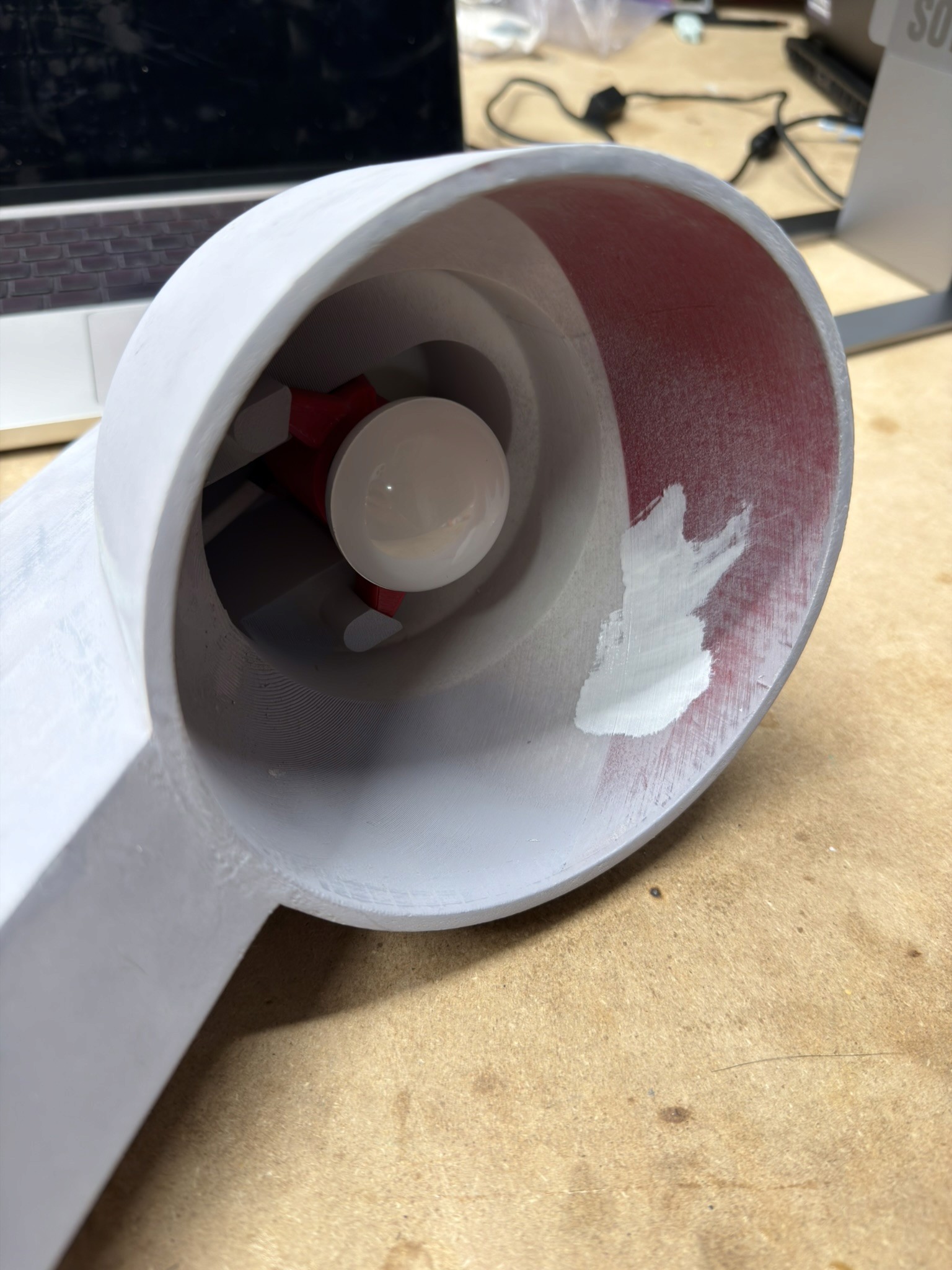
Due to a lack of white PLA filament, the main body was finished with red filament.
Unfortunately, this created a persistent seam that was difficult to hide during surface finishing.
Model slicing
Three interface layers were used to easily remove supports.
Printed socket housing
Red filament was convenient and fine due to internal use.
4
Lightbulb
Manufacturing
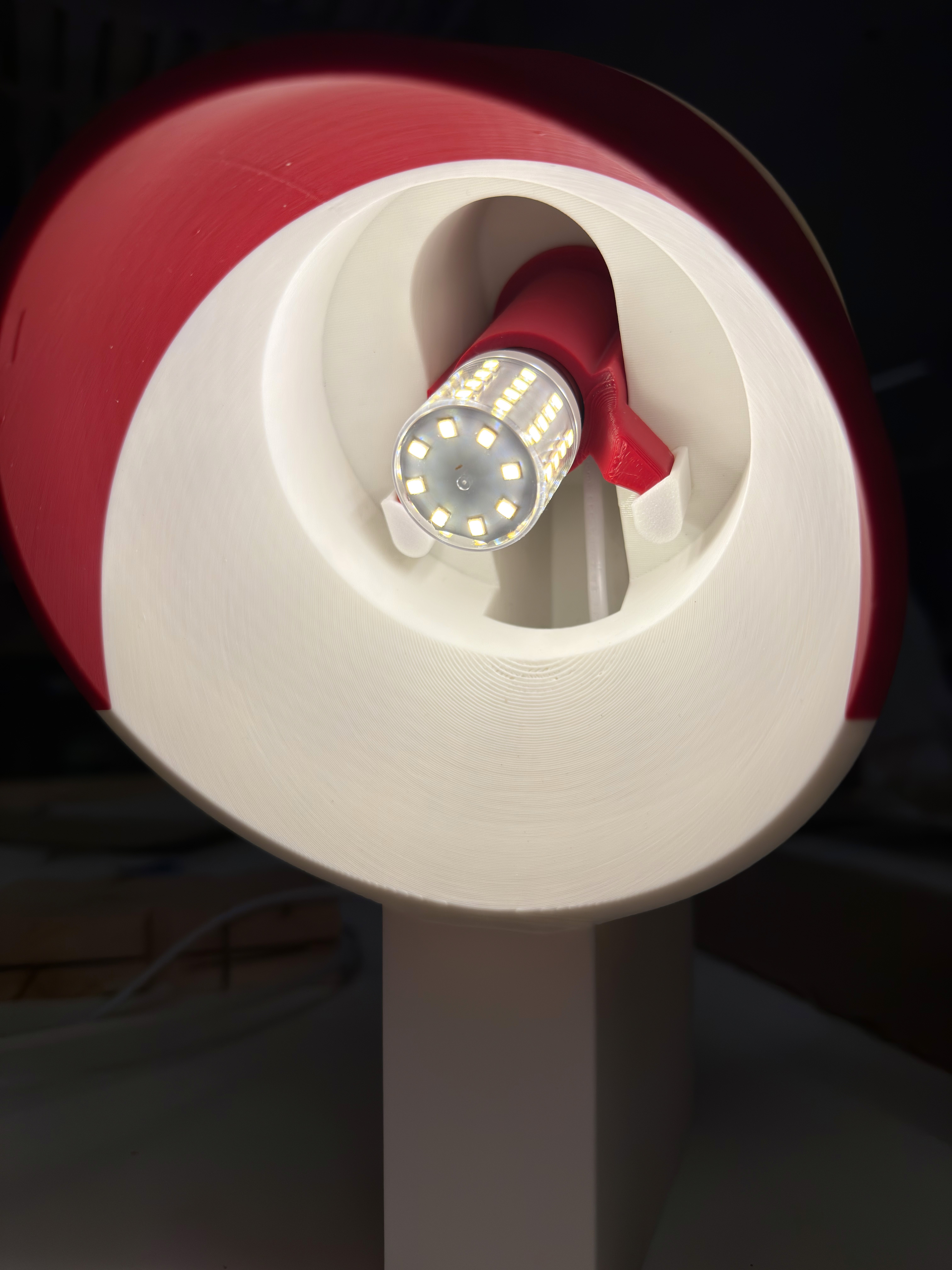
Unsuccessful choice: Refrigerator Lightbulb
This bulb, despite perfectly fitting and illuminating, produced too much heat and could cause the bulb or surrounding material to deform and/or catch fire.
Using what I learned, I tried again:
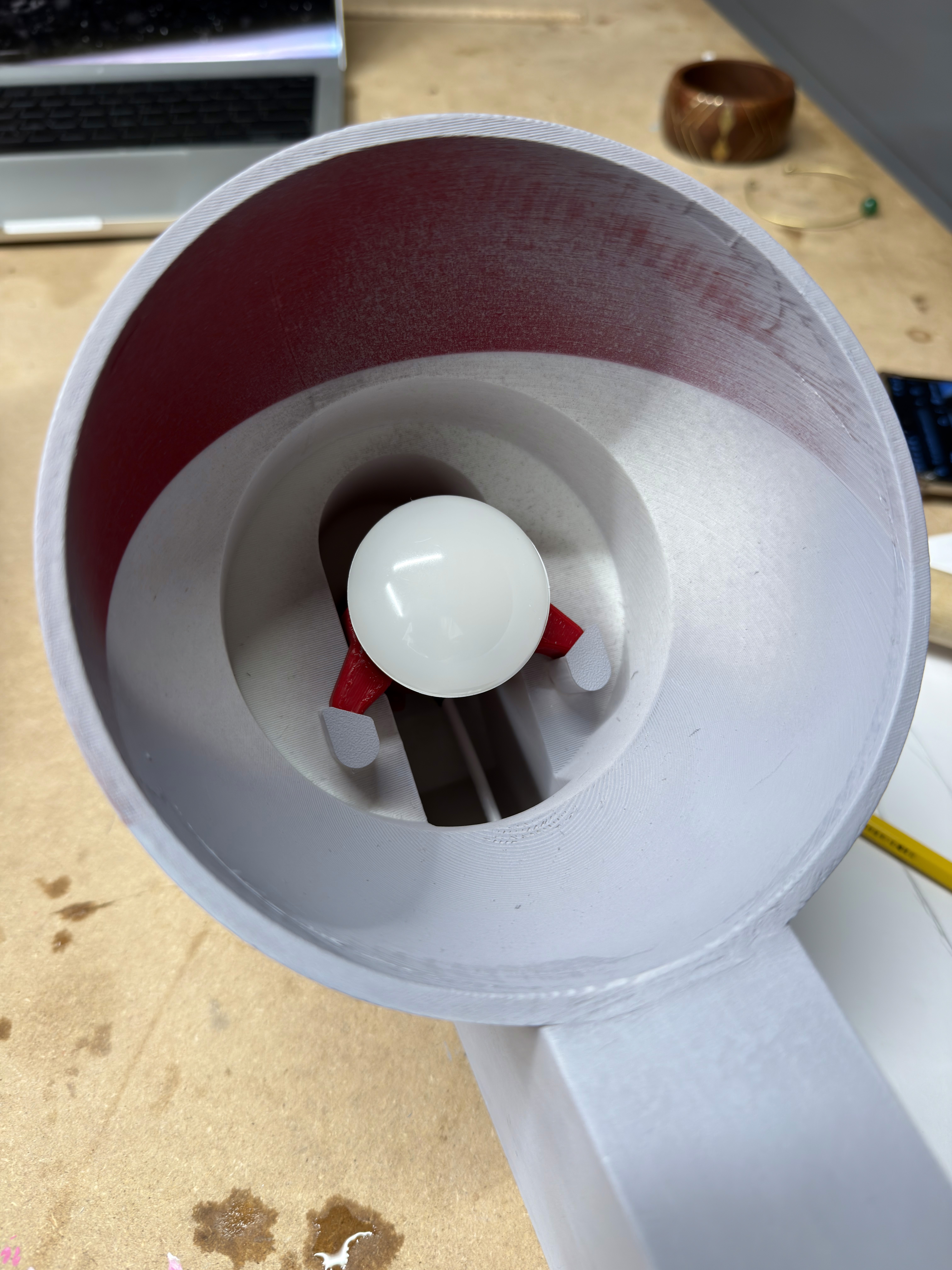
Successful choice: Cabinet Lightbulb
Does not produce excessive heat and satisfies size and light requirements.
Type R14
E26 base
3000K, 300LM
5
Light Diffuser
Manufacturing
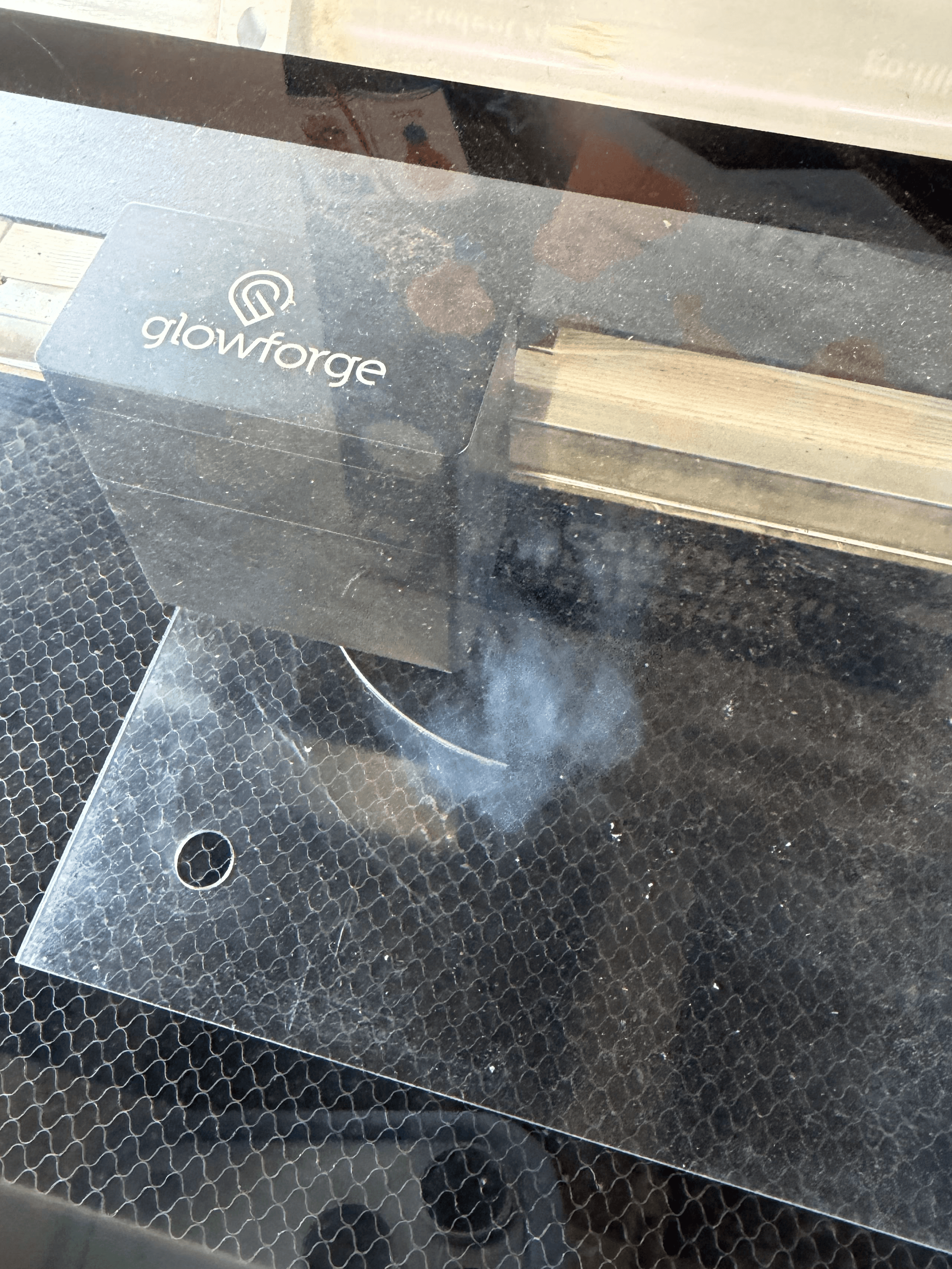
Laser cutting
Cut size set to 0.1mm smaller than its intended space for tight friction fitting.
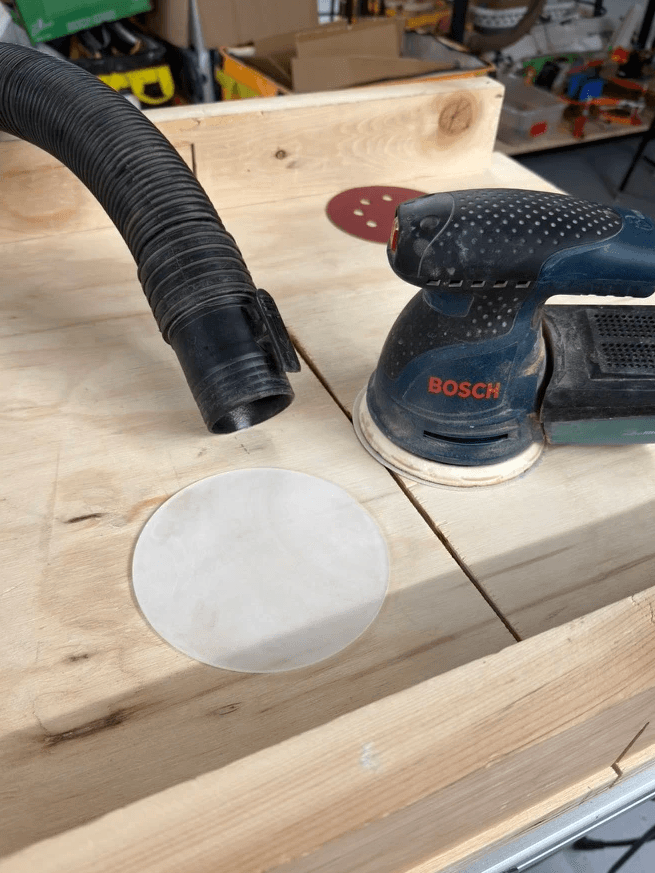
Disk sanding
Using a fine-grit disk sander to frost both sides. Rinsing in between.
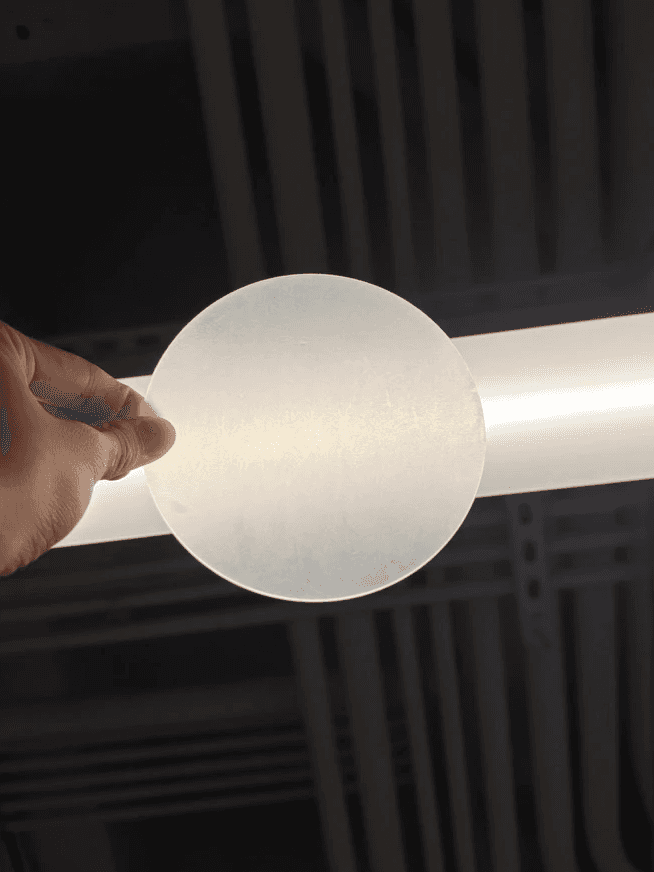
Finish
Effectively diffuses light while being smooth to the touch.
6
Surface Finishing: Priming
Manufacturing
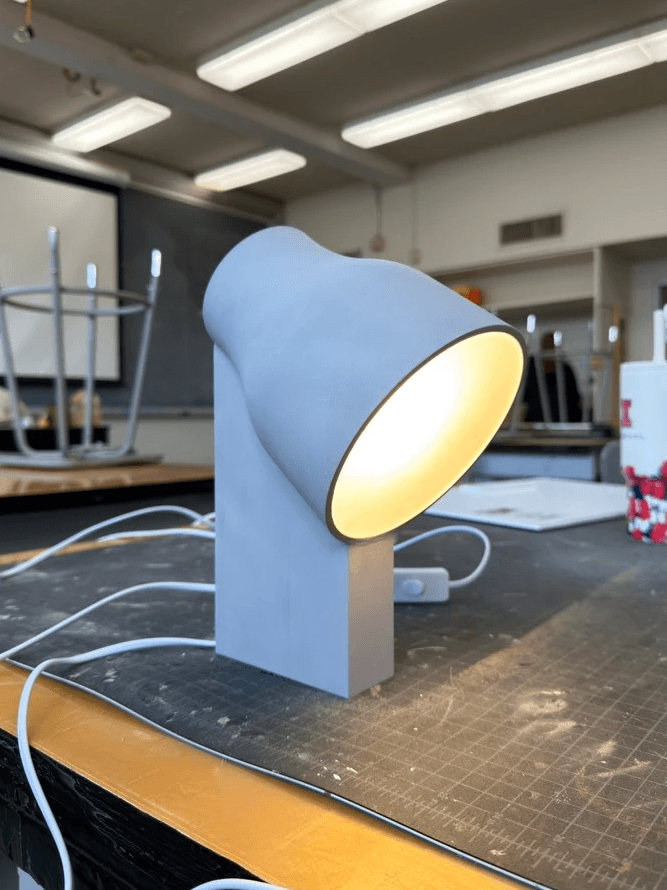
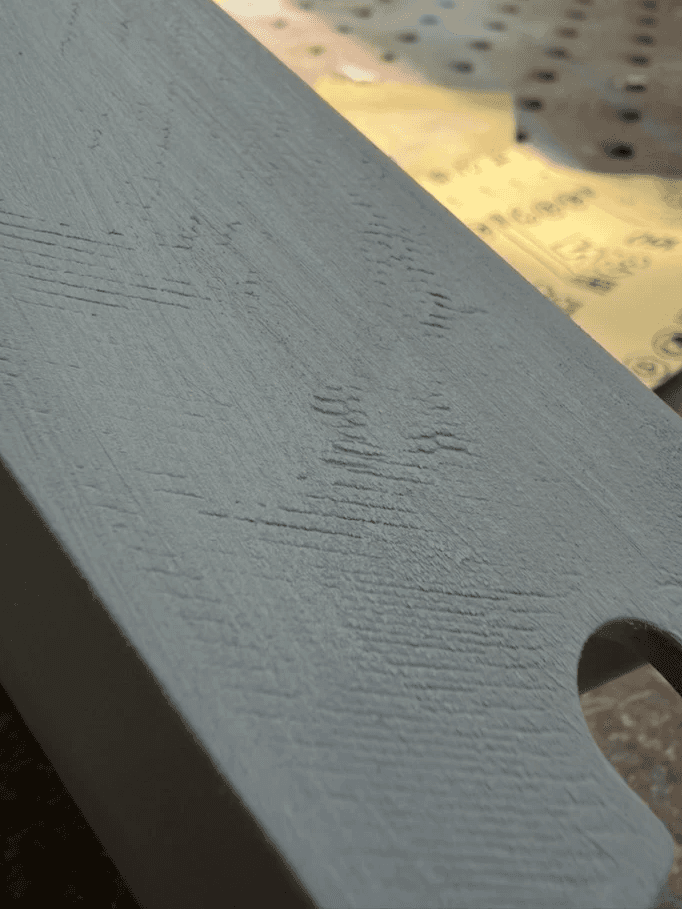
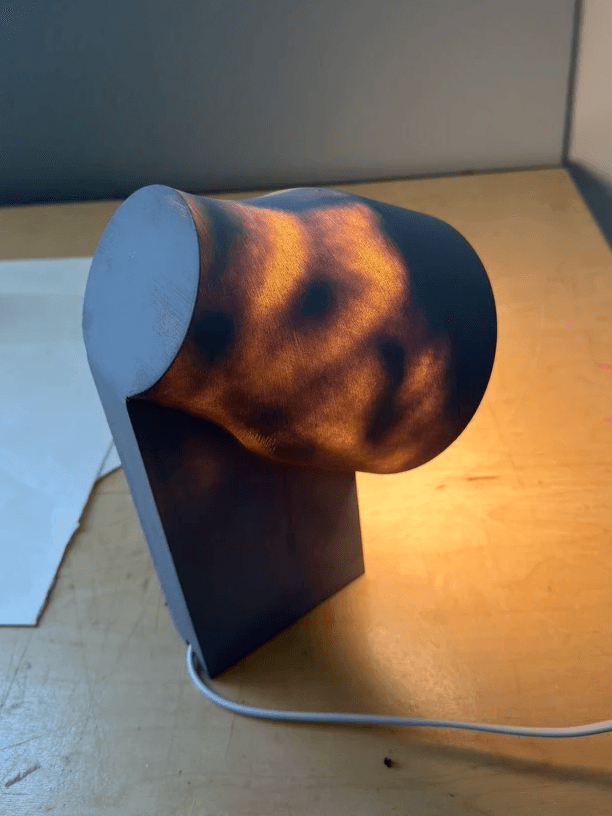
To begin the surface finish, I used Rust-Oleum’s 2-in-1 Primer+Filler and 320-grit sandpaper.
Repeated priming and sanding with finer sandpaper resolved most surface imperfections.
Early Challenges:
Layer lines remaining visible.
Persistent light-leaking.
6
Surface Finishing: Painting
Manufacturing
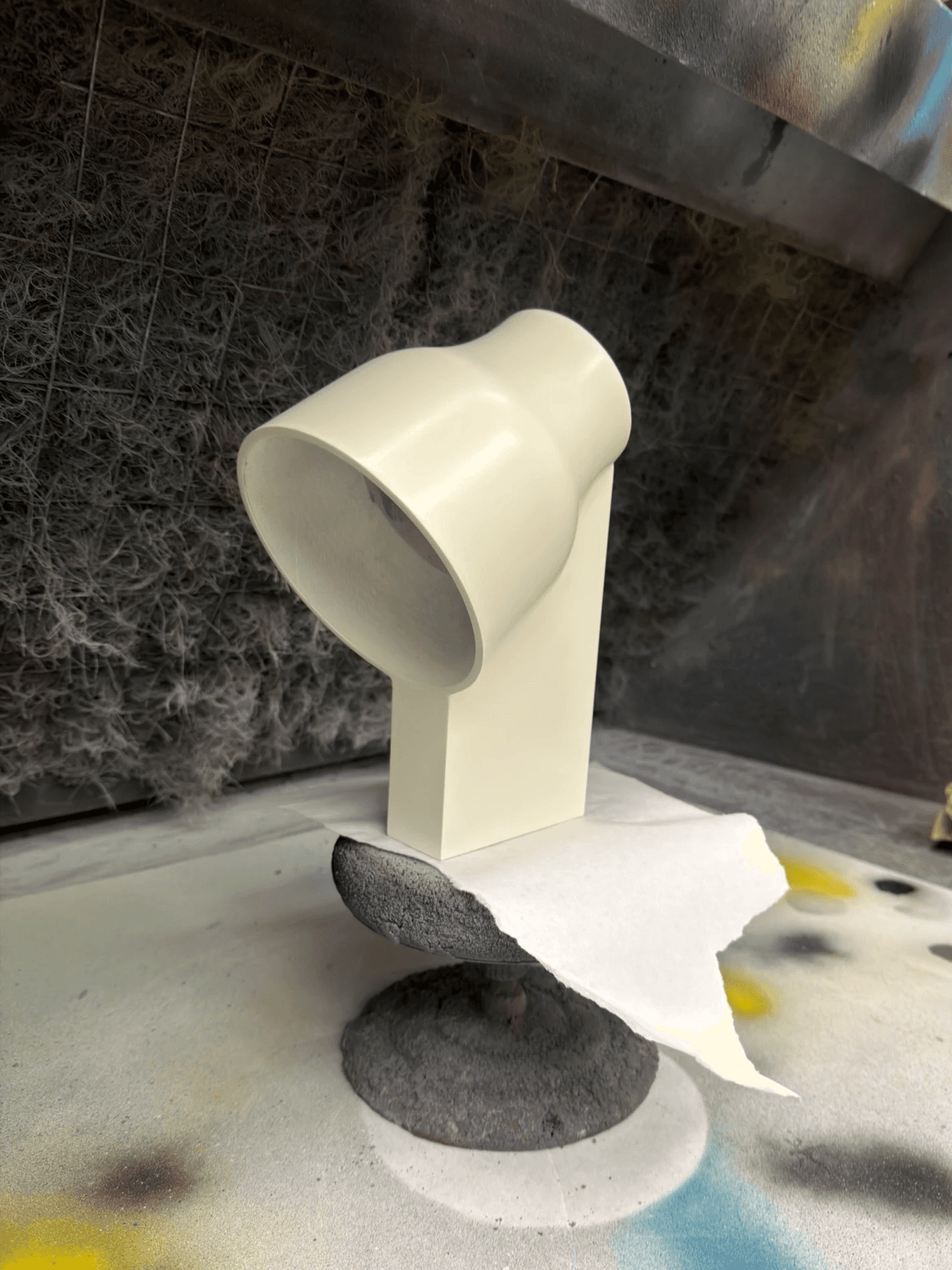
I used Rust-Oleum’s “ivory bisque” semi-gloss spray paint to color the lamp.
Similar to priming, painting required multiple coats for solid color and sanding in-between coats for a flawless finish.
6
Surface Finishing: Final Touches
Manufacturing
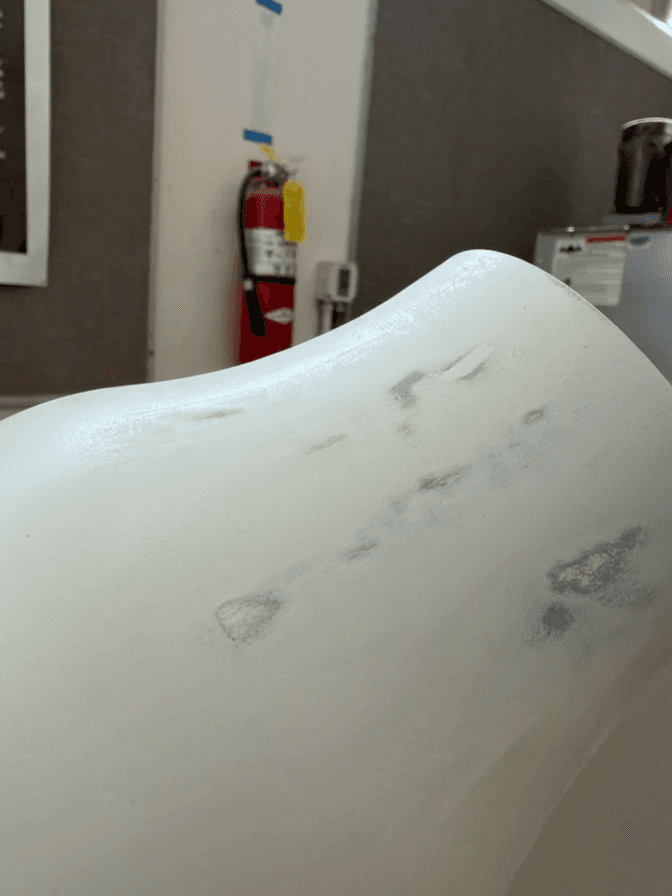
Surface imperfections
I used filler paste and repeated sanding to remove surface imperfections during the painting process.
I painted the light’s interior with white paint to prevent the red filament from showing through the diffuser.
Preventing unintentional colors
Clear coating
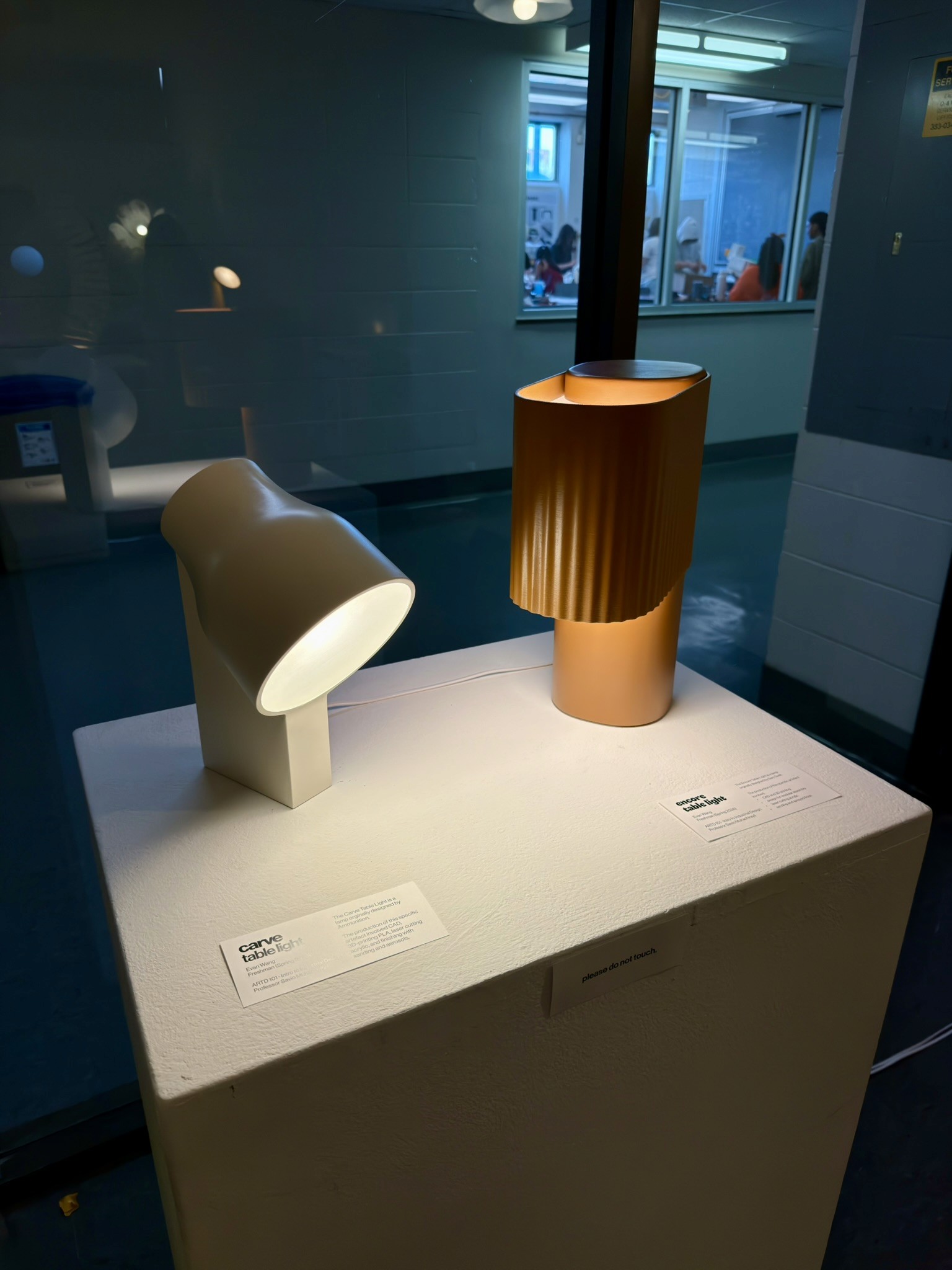
I applied a matte coating for surface protection and additional matte texture.
end of this process book
this portfolio site is updated for desktop browsers.
i'm working on it!!!
screen should be at least 1200px wide
suggested: 1920x1080 resolution or higher